
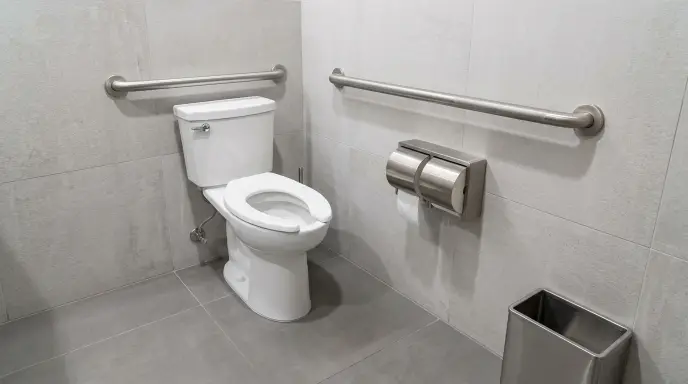
How to Wipe with Limited Mobility: Safe Toilet Hygiene for Seniors & Arthritis
For millions of older adults and people living with arthritis, something as basic as wiping after using the toilet becomes a daily source of pain, frustration, and fear. Shoulder stiffness, spinal fusion, hip arthritis, and weak finger grip can turn a 10-second task into a risky, painful ordeal, sometimes risky enough to cause a catastrophic fall.
The good news: this is an entirely solvable problem. With the right body mechanics, targeted adaptive tools, and a properly arranged bathroom, you can maintain full independence, hygiene, and dignity without joint strain.
The Short Answer (Direct Snippet):
To wipe safely with arthritis or limited mobility without risking a fall, keep both feet flat on the floor, lean slightly forward from the hips instead of twisting sideways, brace your non-dominant hand against a secure grab bar, and use an angled bottom-wiping wand or a bidet attachment to eliminate reaching behind the back.
Quick Summary / Key Takeaways
- Why reaching is difficult: Rotator cuff tears, frozen shoulder, lumbar spinal stenosis, hip replacements, and wrist osteoarthritis severely restrict the rotational range of motion needed to reach behind the trunk.
- Safe reaching mechanics: Never lean heavily to one side. Distribute body weight evenly through both feet and hinge forward from the hips — side-leaning on the toilet seat is the leading cause of bathroom fall injuries during perineal care.
- Three solution categories: (1) Biomechanical posture changes, (2) ergonomic wiping wands that add 8 to 15 inches of reach, and (3) bidet attachments that remove manual friction entirely.
- Balance warning: Keep your non-dominant hand firmly planted on an ADA-rated support rail or wall before attempting to reach with your wiping hand.
Table of Contents
Quick Guide: Matching Your Mobility Limitation to the Right Tool
| Limitation / Health Condition | Best Tool or Technique | Primary Clinical Benefit |
| Rotator Cuff / Frozen Shoulder | Angled bottom-wiping wand (e.g., Juvo, Bottom Buddy style) | Extends reach by 10–15 inches; eliminates backward shoulder extension. |
| Severe Wrist / Finger Arthritis | Electric bidet seat with wireless remote | Eliminates pinching, folding, and manual wiping pressure completely. |
| Spinal Fusion / Lumbar Stenosis | Raised toilet seat + Front-reach method | Keeps spine neutral; prevents dangerous lower-back twisting. |
| Fragile / Thin Aging Skin | Perineal cleansing foam + Soft pat-dry technique | Prevents friction-induced micro-tears caused by dry paper. |
Why Toilet Hygiene Becomes Painful (The Mobility & Arthritis Challenge)
Root Causes
Safe perineal hygiene relies on a synchronized combination of shoulder extension, internal humerus rotation, spinal flexion, and fine motor finger control. These functions are often among the first to decline with age or chronic joint conditions.
- Shoulder and elbow stiffness: Conditions like rotator cuff tendinopathy and adhesive capsulitis (frozen shoulder) make the backward-and-upward reach behind the glutes excruciating.
- Reduced spinal and hip flexibility: Lumbar fusion, disc degeneration, and hip osteoarthritis limit axial rotation, making twisting at the waist virtually impossible.
- Weak grip and finger deformity: Rheumatoid arthritis and osteoarthritis degrade the fine pinch strength needed to grasp, fold, and manipulate dry toilet paper securely.
The Hidden Risks
Compensating for physical limitations creates serious health and safety hazards:
- Fall risk: Leaning off-center to compensate for limited reach shifts your center of gravity outside the toilet’s base, making side slips onto hard tile a frequent emergency room trigger.
- Hygiene-related infections: Incomplete cleaning leaves residual bacteria that can cause severe dermatitis, fungal infections, pruritus ani, and recurrent urinary tract infections (UTIs) in older women.
- Loss of dignity: Many seniors suffer in silence rather than asking family members for help with personal hygiene, leading to self-isolation and poor health habits.
Ergonomic Body Mechanics: How to Reach Without Risking a Fall
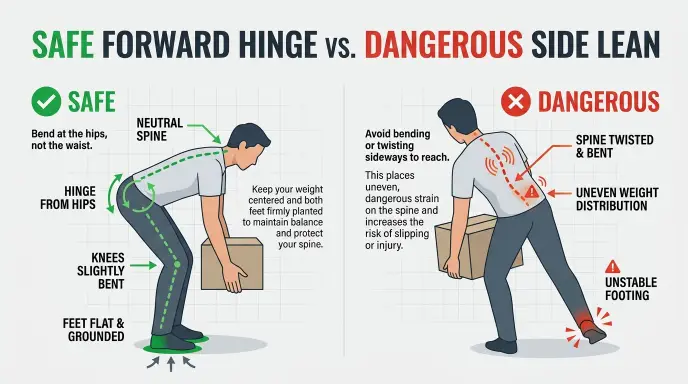
Most guides jump straight to selling gadgets while ignoring posture. Body mechanics are your primary defense against toilet falls.
The “Lean Forward vs. Side Lean” Rule
The instinctive response when you cannot reach behind is to lift one buttock cheek and tilt sideways. This is exceptionally dangerous on a smooth toilet seat.
The safer alternative: Plant both feet flat on the floor, roughly shoulder-width apart, ensuring your heels are firmly grounded. Hinge forward from the hips at a 30-degree angle while keeping your spine straight and neutral. This movement naturally opens access to the perineal area from behind while keeping your center of mass anchored directly between your knees.
Front-to-Back vs. Reaching From the Front
For women, the clinical front-to-back wiping rule is mandatory to prevent moving coliform bacteria into the urethra. However, if frozen shoulders or fused vertebrae prevent reaching behind, you do not have to break this safety rule:
Lean forward, separate your knees comfortably, and guide your hand or wiping aid between the thighs from the front. Wipe smoothly in a backward direction toward the perineum. This protects your urinary tract while sparing your shoulders from painful rotation.
Stabilizing While Wiping
Your free hand must serve as an active anchor:
- Keep your non-dominant hand braced on the adjacent wall, a sturdy vanity surface, or ideally, a dedicated wall-mounted rail.
- Never brace yourself on the toilet paper dispenser, a radiator pipe, or a towel bar. These fixtures cannot withstand sudden dynamic body weight and will tear free from drywall anchors.
For optimal placement of supportive rails within arm’s reach of the bowl, check our comprehensive guide on grab bar placement for seniors.
Adaptive Toilet Aids: Which Tool Fits Your Specific Limitation?
Different joint conditions demand different mechanical aids. Match your primary symptom to the appropriate category below.
A. Bottom Wiping Aids (Wand / Extender Tools)
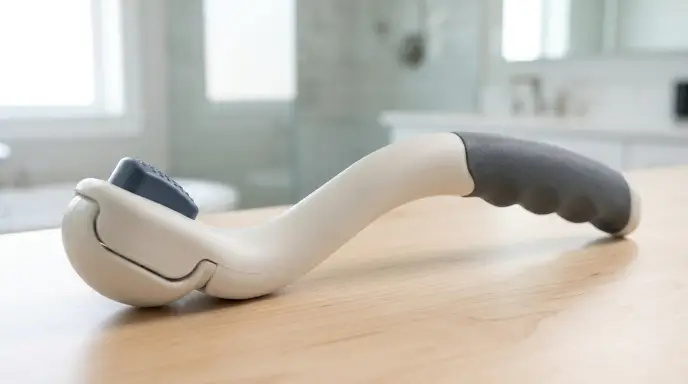
- How they work: Devices like the Bottom Buddy, Freedom Wand, or curved ergonomic wiping aids hold folded tissue or wet wipes inside a specialized silicone grip head. They extend your physical reach by 8 to 15 inches, completely bypassing restricted shoulder joints.
- Angled vs. straight shafts: Choose an ergonomically curved shaft over a straight stick. A curved design follows the natural contour of the hip, requiring almost zero wrist flexion.
- Push-button release mechanisms: If you suffer from severe thumb or finger arthritis, avoid wands that require manual pulling to release dirty paper. Select models featuring a spring-loaded push button on the handle end, allowing you to drop soiled paper straight into the bowl hands-free.
B. Bidet Attachments & Toilet Seats (The Hands-Free Solution)
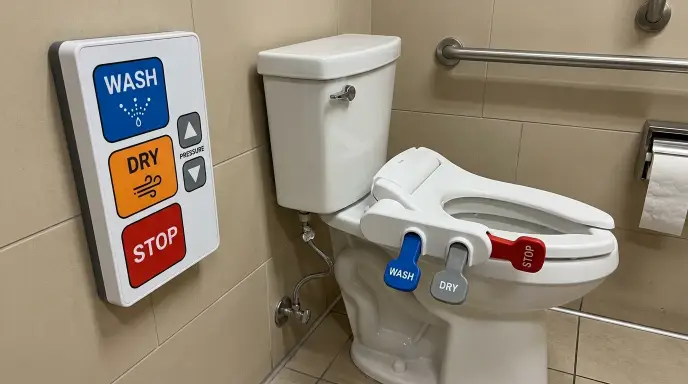
For severe, progressive joint limitations, the gold standard is eliminating manual wiping. A targeted water spray cleans more thoroughly than dry paper without putting pressure on inflamed joints.
- Ideal candidates: Individuals with severe rotator cuff damage, cervical/lumbar fusions, Parkinson’s tremors, or advanced hand deformities.
- Ergonomic controls: Select bidet seats equipped with large paddle levers or high-contrast wireless remote controls. Small turning dials are difficult to manipulate with stiff or swollen fingers.
To explore models engineered specifically for aging hands, read our detailed review of the best bidet attachments for seniors.
C. Moist Flushable Alternatives & Foam Cleansers
Dry toilet paper creates mechanical friction that can tear fragile, thinning skin. Applying a no-rinse perineal cleansing foam directly onto tissue, or using moist wipes, reduces the passes needed to get clean.
- Plumbing safety warning: Despite packaging claims, moist wipes do not disintegrate like toilet paper and regularly clog municipal pipes and septic baffles. Keep a hands-free, step-lid trash can next to the toilet for safe disposal.
Setting Up the Toilet Area for Pain-Free Hygiene
Adapting your physical environment removes unnecessary joint strain before personal care even begins.
Toilet Height Adjustment
Standard residential toilets measure roughly 14 to 15 inches from the floor to the rim. Sitting this low forces knees higher than hips, compressing the abdominal cavity and drastically narrowing the gap needed to slip a hand or wiping wand under the body.
Upgrading to an ADA “Comfort Height” toilet (17 to 19 inches) or installing an elevated toilet seat opens up the pelvic angle and relieves immense strain on the hips and shoulders. Compare your support options in our guide to toilet safety rails vs. raised toilet seats.
Toilet Paper Holder Placement
Having to turn around to reach toilet paper mounted behind your shoulder is an accident waiting to happen. Relocate the dispenser 7 to 9 inches forward from the front rim of the toilet bowl, mounted at a height of 24 to 30 inches, within effortless arm’s reach.
Anti-Slip Grounding
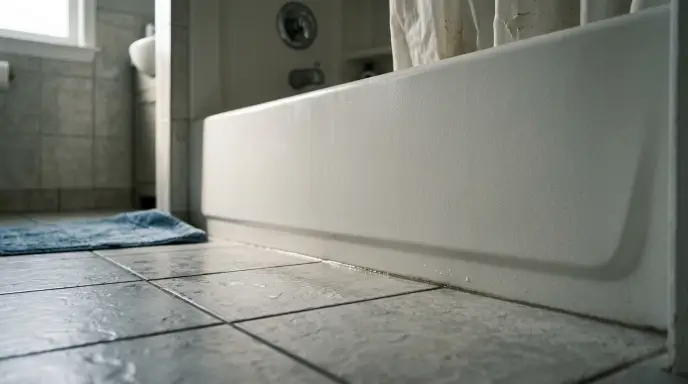
Your feet cannot slip while you are leaning forward to clean yourself. Remove lightweight, unbacked floor mats that slide across slick porcelain tile. For dependable surface options, see our practical advice on slippery bathroom floor safety for elderly adults.
Hygiene & Skin Breakdown Prevention (For Caregivers & Seniors)
Incomplete Wiping Risks
Failing to remove all fecal matter creates an acidic environment that breaks down skin integrity. Prolonged exposure causes excoriation, fungal yeast infections, pruritus ani, and ascending urinary tract infections.
Drying Techniques
Never rub skin dry after washing or using wipes. Vigorous rubbing on damp, fragile tissue causes micro-abrasions. Always use a gentle patting or blotting motion using soft tissue or a dedicated, clean cotton washcloth.
Barrier Creams & Protective Lotions
If mobility limitations result in minor daytime leakage or skin redness, apply a thin layer of dimethicone or zinc oxide barrier cream after cleaning. This locks out irritants without preventing normal perspiration.
Step-by-Step Guide: How to Properly Use a Bottom Wiper Tool
Follow this sequence to use an extended hygiene wand cleanly and comfortably:
- Step 1: Prep & Wrap: Fold 3 to 4 sheets of quality toilet paper accordion-style. Push the edges firmly into the silicone grip head of the wand, ensuring the working surface is smooth and padded.
- Step 2: Posture & Grip: Plant both feet flat on the floor. Hinge slightly forward at your hips. Grip the wand handle using your palm and forearm strength rather than pinching tightly with arthritic fingertips.
- Step 3: Gentle Motion: Guide the wand head between your legs (from the front) or around the hip (from behind). Use slow, light, front-to-back sweeping strokes. Let the tool do the work; never use forceful poking motions.
- Step 4: Push-Button Ejection: Position the head over the toilet bowl water. Depress the top actuator button with your thumb or palm to release the soiled paper directly into the bowl.
- Step 5: Sanitizing the Wand: Rinse the silicone tip under warm running water using antibacterial soap, dry it thoroughly with a paper towel, and store it upright in a ventilated holder.
Frequently Asked Questions
How do you wipe your bottom when you can’t reach behind?
The safest method is to hinge forward from your hips with feet firmly planted, reach between your thighs from the front, and wipe front-to-back using an angled bottom-wiping wand. Alternatively, installing a warm-water bidet attachment cleans thoroughly without requiring any manual reaching.
Are bidet seats better than wiping aids for severe arthritis?
Yes. For seniors with severe rheumatoid arthritis, rotator cuff tears, or spinal fusions, a bidet seat is the superior long-term choice. It automates washing and warm-air drying, completely removing the hand grip, twisting, and skin friction associated with manual tools.
What can I use instead of toilet paper if my hands are too stiff?
Moist hygiene wipes paired with a wand, or a no-rinse perineal cleansing foam dispensed onto soft paper, require much less pressure than dry paper. These alternatives lift residue quickly without demanding heavy rubbing or precision folding.
How do seniors avoid falling off the toilet while leaning to wipe?
Never lean sideways off the edge of the toilet seat. Keep both feet flat on the floor to maintain a wide, stable base, lean straight forward from the hips, and always rest your free hand on a securely anchored wall grab bar.
Maintaining Independence and Personal Dignity
Preserving your ability to manage toilet hygiene independently protects your physical safety, emotional well-being, and self-respect. Applying stable body mechanics, adapting your toilet height, and choosing the right reach-extending tool removes fear from your daily routine.
If you are planning wider safety upgrades across your home, consult our foundational resource on senior bathroom safety to identify and eliminate hazards before they lead to an injury.




6 Comments