
Suction vs. Screw-In Grab Bars: What’s Actually Safe for Seniors?
Direct Answer: Are Suction Grab Bars Safe for Seniors?
No, suction grab bars are not safe as primary weight-bearing aids for seniors. When comparing suction vs screw in grab bars, safety and weight capacity are the most critical factors for seniors. Suction bars rely on an airtight vacuum seal that steadily degrades due to humidity, grout lines, and micro-textures on tiles. They are rated solely for light balance assistance (30 to 70 lbs of lateral pull). A permanent, screw-in (wall-mounted) grab bar anchored into wall studs is the only bathroom support that satisfies ADA standards to safely withstand 250 to 500+ lbs of sudden falling weight.
A slick bathroom floor is one of the most hazardous environments in a home for aging adults. When balance slips or joints stiffen, the instinct is to grab onto the nearest surface for support.
For family caregivers and seniors looking for quick fixes, suction grab bars seem like an easy, mess-free choice: they take seconds to mount, require no power tools, and avoid drilling through expensive tile. However, placing full trust in a suction cup inside a humid shower creates a dangerous illusion of security.
When planning long-term safety as part of a complete aging-in-place bathroom guide, you must look past the ease of installation and evaluate what happens when a real fall occurs.
Table of Contents
Suction vs Screw-In Grab Bars: Direct Comparison
| Safety & Structural Factor | Suction Grab Bars | Screw-In (Wall-Mounted) Grab Bars |
| Weight Capacity | 30 – 100 lbs (Light balance only) | 250 – 500+ lbs (Full body weight) |
| ADA Compliance | Never ADA-compliant | Meets or exceeds ADA safety rules |
| Failure Mode | Sudden, silent release of seal | Gradual loosening (visible warning) |
| Surface Compatibility | Smooth, flat, non-porous tile only | Any surface (tile, drywall, fiberglass, stone) |
| Moisture / Steam Impact | Weakens vacuum seal over time | Impervious to moisture and steam |
| Best Used For | Travel, short-term tactile guide | Permanent daily safety & fall prevention |
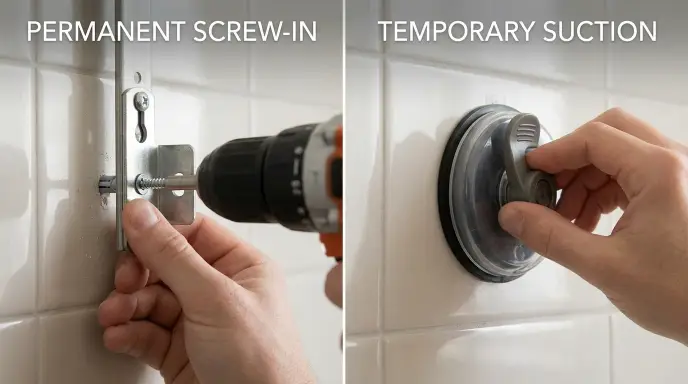
The Science of Failure: Why Suction Grab Bars Give Way
Suction grab bars rarely snap in half; their vacuum seal fails. Understanding the physics behind why these seals break explains why physical therapists and safety experts do not recommend them for comprehensive senior bathroom safety.
1. Dynamic Load vs. Static Load
Manufacturers frequently test suction grab bars under static load conditions—a smooth, continuous pull applied gradually in a dry test lab.
In everyday life, an accidental slip causes a dynamic load. When a senior slips on a slippery bathroom floor, their full mass impacts the bar in milliseconds. That sudden angular torque snaps the seal’s edge, popping the cup off the wall precisely when leverage is needed most.
2. Grout Lines and Tile Texture
A suction cup requires a complete, airtight boundary. If any part of the rubber pad overlaps a grout line—even by a millimeter—air leaks into the chamber. Furthermore, modern ceramic or stone tiles often feature microscopic glaze textures that let air seep in over time, breaking the vacuum without warning.
3. Shower Steam and Temperature Fluctuations
Bathrooms undergo continuous cycles of heat and dampness. Hot water vapor expands the rubber seal, while drying cycles shrink it. Over time, warm water droplets seep beneath the suction rim, creating a slick film that slides downward under lateral pressure.
4. Unreliable Indicator Locks
Many retail suction bars include small color-coded (red/green) latches designed to confirm security. These mechanical latches only confirm that the plastic lever was pressed down—they cannot detect slow air leaks or surface grime under the pad. A green indicator can remain visible even moments before the bar slides off the wall.
Why Screw-In Grab Bars Are the Gold Standard
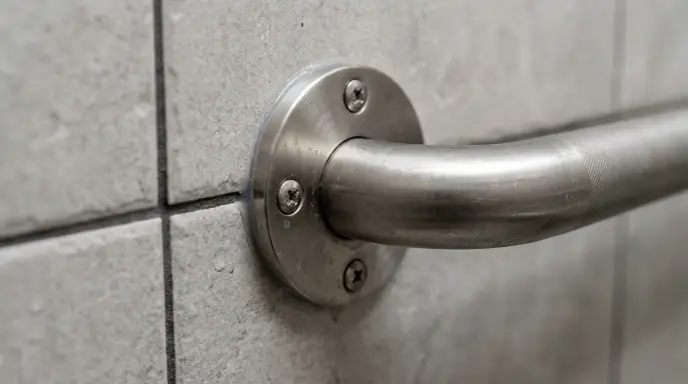
Permanent, wall-mounted grab bars eliminate the risk of suction loss by securing directly to the home’s structural framing.
1. Built to ADA Structural Requirements
The Americans with Disabilities Act (ADA) requires bathroom grab bars and mounting hardware to withstand at least 250 pounds of concentrated pull force. Heavy-duty residential screw-in models routinely hold between 300 and 500 lbs, accommodating heavier adults during transfers or sudden slips.
2. Wall Studs vs. Heavy-Duty Anchors
- Direct Stud Mounting: Driving 2.5- to 3-inch stainless steel screws into vertical 2×4 wall studs provides maximum security.
- Hollow-Wall Anchors (Moen SecureMount / WingIts): If wall studs are not located where support is needed, specialized structural anchors allow screw-in bars to be mounted directly into hollow drywall or tile while retaining full 300+ lb ratings.
Where you install the bar is just as critical as how firmly it is fastened. For specific mounting heights, angles, and entry clearances, review our visual guide on grab bar placement for seniors. If you are updating a standalone shower stall, follow the exact layout in our walk-in shower grab bar placement breakdown.
When Is a Suction Grab Bar Acceptable?
While suction bars should never serve as primary fall-prevention equipment, they can be utilized in specific, low-risk scenarios:
- Short-Term Travel: Packing a compact suction handle for temporary hotel stays provides a familiar tactile balance guide.
- Proprioceptive Balance Touch: Seniors who retain full leg strength but deal with minor inner-ear imbalance can use the bar as a feather-light touchpoint.
- Temporary Post-Surgical Rehab in Rentals: When lease restrictions prohibit wall drilling for a 2-week recovery window, provided an assistant is present.
Safety Rule: If an individual must pull against the bar to rise from a seated position, a suction bar is unsafe. They need a permanent, bolted fixture.
Safer Alternatives When You Cannot Drill into Tile
If you live in a rental property or want to avoid drilling into fragile tiles, bypass suction bars and consider these non-invasive, structural solutions:
1. Floor-to-Ceiling Tension Poles
These heavy-duty metal support poles use industrial tension screws between the floor and ceiling. Padded with non-marking rubber ends, they hold up to 300 lbs of lateral weight without requiring a single screw hole.
2. Freestanding Toilet Safety Frames
Instead of placing suction handles on the walls flanking the toilet, install dedicated toilet safety rails that bolt directly to the toilet bowl’s seat hinge bolts, transferring lifting weight straight into the porcelain fixture.
3. Tub-Clamping Transfer Benches
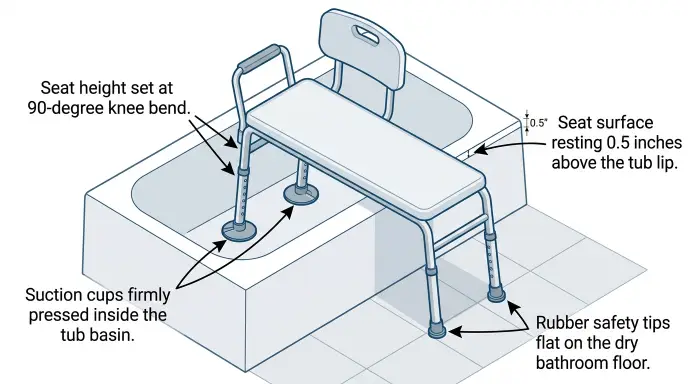
Stepping over a tall tub wall is one of the highest-risk movements in the home. Instead of holding a suction bar while stepping over, use a sliding transfer bench. Our side-by-side guide on a shower chair vs. transfer bench for bathtubs explains how seniors can slide safely into the tub while seated.
How to Test and Inspect Bathroom Safety Today
Before making updates, conduct a systematic assessment using our complete senior bathroom safety checklist.
If suction handles are currently installed in your home, run through this inspection immediately:
- The Dynamic Pull Test: Grasp the suction handle firmly and apply a sharp, downward pull. If it slides, shifts, or unlatches, take it off the wall immediately.
- The 48-Hour Reset: If temporary suction bars must remain in place, clean the tiles and rubber pads with rubbing alcohol every 48 hours to clear soap film, and re-engage the clamps weekly.
- Plan for Permanent Installation: Hire a licensed handyman or accessibility technician to mount textured stainless steel bars into wall studs.
Frequently Asked Questions (FAQ)
Can suction grab bars hold an adult’s full body weight?
No. Suction bars are rated solely for balance assistance (roughly 30 to 70 lbs of pulling force). The dynamic weight of an adult slipping will overcome the vacuum seal and rip the bar from the wall.
Do suction grab bars work on fiberglass showers?
Generally, no. Fiberglass and acrylic tub surrounds flex slightly when pushed or pulled. That flexing breaks the airtight seal along the rim of the suction cup, causing it to fall off much faster than it would on flat glass or polished stone.
Will Medicare cover the cost of screw-in grab bars?
Original Medicare (Part A and Part B) views grab bars as self-care convenience items rather than Durable Medical Equipment (DME), meaning they do not cover installation costs. To explore coverage options and exceptions, read our breakdown on does Medicare pay for bathroom modifications
What is the safest surface finish for a senior grab bar?
Avoid smooth, polished chrome finishes, which become dangerously slick when covered in soapy water. Instead, select grab bars with a knurled (textured cross-hatch) surface, a brushed finish, or integrated non-slip rubber grips.
Final Verdict
The convenience of drill-free suction grab bars is tempting, but they simply cannot provide the physical reliability an aging body needs during a fall. When someone slips on wet tile, they need an anchor that will not give way.
Mounting heavy-duty, screw-in grab bars into wall studs is the only dependable way to secure a bathroom for aging in place. In senior fall prevention, lasting stability is worth every drill hole.




4 Comments