
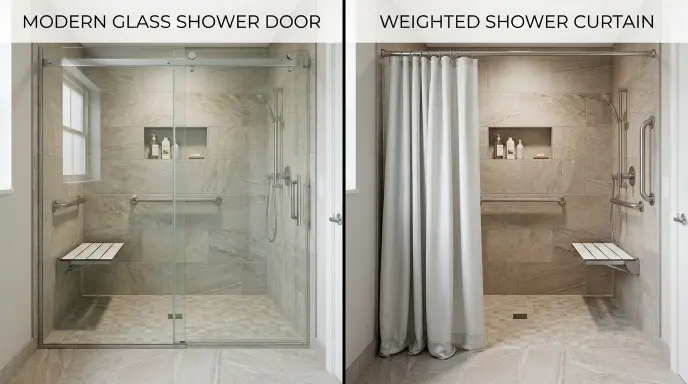
Glass Shower Doors vs. Curtains for Seniors: Fall Risks & Safety
Slip-and-fall accidents in the bathroom are the leading cause of fatal and non-fatal injury among aging adults, and the shower enclosure is overwhelmingly where these hazards occur. For families and caregivers adapting a home for aging in place, comparing glass shower doors vs. curtains for seniors isn’t a matter of style—it is a critical choice between impact-trauma hazards and wet-floor slip risks.
Quick Verdict: Which Is Safer for Seniors?
Direct Answer: For most seniors—especially those using walkers, shower chairs, or wheelchairs—a weighted, wall-anchored shower curtain is the safer overall choice. Curtains completely remove spontaneous glass-shatter risks, eliminate dangerous bottom tripping tracks, and guarantee unobstructed access for caregivers during emergencies. A glass shower door is only acceptable for seniors with high independent mobility, provided it is constructed with shatter-resistant laminated safety glass and features a completely curbless (zero-threshold) roll-in track. When designing a safe, accessible bathroom for aging in place, choosing the right shower enclosure is just as vital as following a complete aging-in-place bathroom guide to protect aging adults.
Table of Contents
Quick Safety Comparison: Glass Doors vs. Curtains
| Feature / Risk Factor | Weighted Shower Curtains | Glass Shower Doors | Senior Safety Winner |
|---|---|---|---|
| Fall & Grab Support | Tears away under weight; rod falls if unanchored | High risk of glass cracking or sudden shattering | Curtains |
| Water Containment | Can leak around tub edges if unweighted | Hermetically seals spray; stops puddles | Glass Doors |
| Mobility Aid Clearance | 100% wide-open, flexible access | Frame and sliding tracks narrow the entryway | Curtains |
| Caregiver Assistance | Instant, wide reach without physical barriers | Rigid glass obstructs reach and movement | Curtains |
| Entrapment in Emergencies | Zero blockage; can be pushed or cut aside | Doors can jam against a fallen body | Curtains |
| Maintenance Strain | Machine-washable; effortless to swap out | Heavy scrubbing causes bending and back strain | Curtains |
The Hidden Hazards of Glass Shower Doors for the Elderly
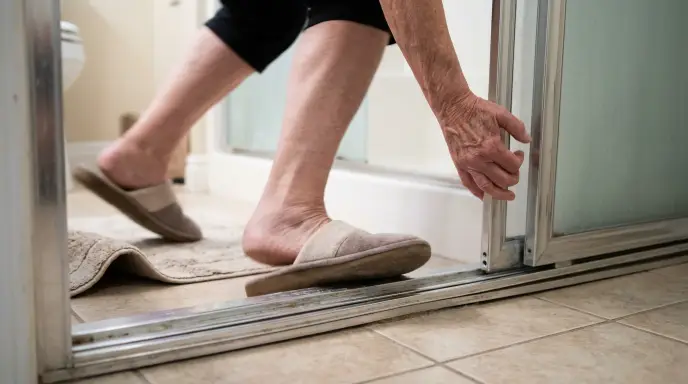
While modern glass shower enclosures offer clean lines and an upscale aesthetic, they introduce severe structural failure points and trauma risks for older adults.
1. The False Sense of Grab Support
When an older adult loses footing on wet tile, natural human reflex causes them to instinctively grab whatever is closest. In a glass enclosure, that object is usually the metal door handle, horizontal towel bar, or the glass panel itself. Shower door hardware is designed solely to slide or swing a panel—it is not weight-rated. Under a sudden 150-to-200-pound dynamic fall load, handles snap off, tracks pull loose from anchors, and the senior falls with zero resistance. Instead of relying on unstable door handles, caregivers should follow ADA-compliant walk-in shower grab bar placement guidelines to ensure reliable weight-bearing support.
2. Spontaneous Shattering and Impact Trauma
Tempered glass is engineered to resist blunt force across its face, but it is vulnerable to focused edge impacts. A simple bump from an aluminum walker leg, the metal footplate of a wheelchair, a dropped metal cane, or a hard plastic shower seat can cause localized structural compromise, triggering immediate catastrophic shattering. Even though tempered glass breaks into blunt pebbles rather than dagger-like shards, the explosive breakage against thin, fragile senior skin leads to severe bruising, cuts, and secondary impact trauma.
3. Bottom Tracks as Tripping Hazards
Sliding glass bypass doors rely on a raised metal channel mounted to the shower threshold. This channel typically sticks up 1 to 2.5 inches. For seniors experiencing reduced foot lift, shuffling steps, peripheral neuropathy, or poor depth perception, this metal channel acts as an invisible tripwire right in the primary transition zone.
The Real Risks of Shower Curtains (And How to Fix Them)
Many safety guides call shower curtains “100% safe” simply because fabric cannot shatter. However, unmanaged curtains create subtle hazards that directly lead to slips and falls.
1. Water Leakage Creating Wet-Floor Hazards
The primary hazard of a shower curtain is water containment failure. Without proper precautions, thermal drafts suck the curtain inward (the Bernoulli effect), leaving gaps along the side walls. Water escapes onto the outside floor tile, transforming a dry, walkable bathroom surface into an invisible slip sheet.
2. Spring-Tension Rod Failure
Standard shower curtains are hung on spring-tension rods held in place only by rubber friction pads. If an older adult slips and grabs the curtain fabric to catch themselves, the sudden downward force pulls the rod out of position instantly. The senior falls backward to the hard floor, holding a collapsed rod that accelerates their fall instead of arresting it.
3. Mildew Buildup and Respiratory Health
Plastic liners and heavy vinyl curtains that remain bunched up after use trap moisture, quickly breeding black mold, mildew, and bacterial slime. Seniors with compromised immune systems, asthma, or Chronic Obstructive Pulmonary Disease (COPD) face increased respiratory inflammation from repeated airborne spore exposure in confined spaces.
Critical Senior Factors Most Comparisons Ignore
Choosing between doors and curtains requires assessing real-world caregiving, emergency response, and mobility equipment requirements.
Caregiver Ergonomics and Assistance
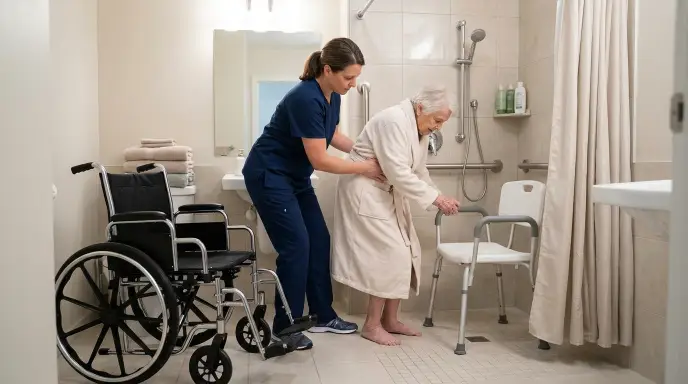
If a senior requires physical assistance with bathing, a caregiver must stand outside the spray zone while reaching in. Sliding glass doors block at least 50% of the shower opening at all times, forcing the caregiver into awkward, twisted postures that risk back injuries. A curtain can be pulled completely aside, allowing full physical access to help the bather wash safely.
Mobility Equipment Clearance (32–36 Inches)
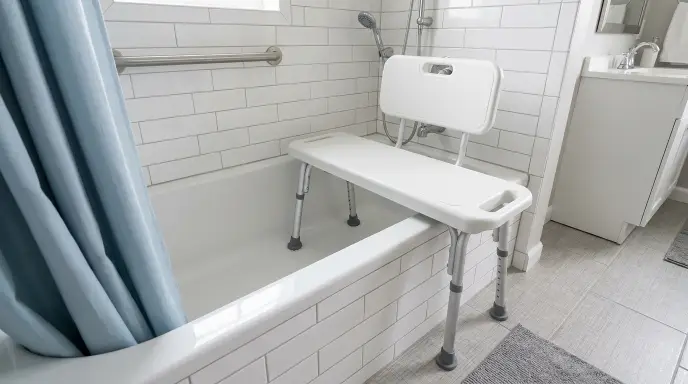
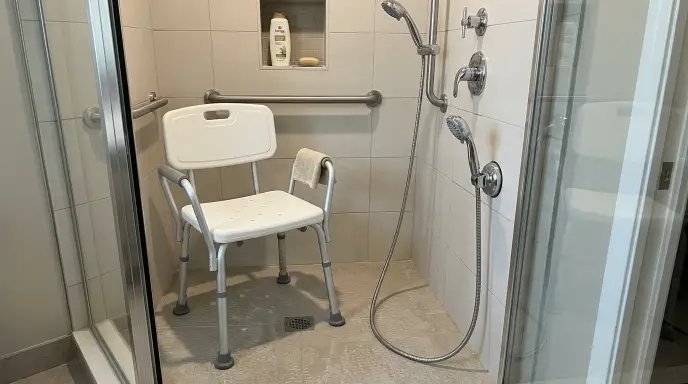
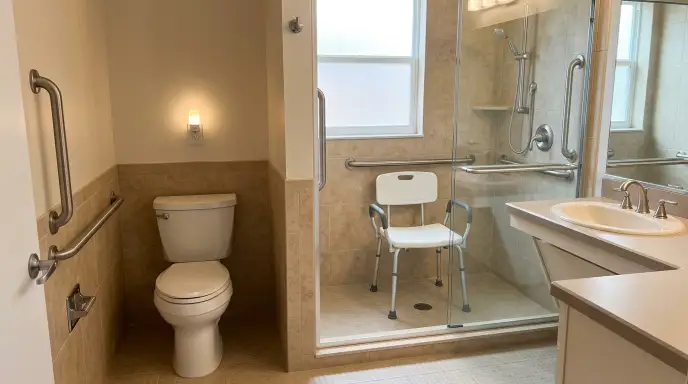
Standard rolling shower chairs, transport wheelchairs, and multi-point walkers require a clear opening of at least 32 to 36 inches to pass through safely. Sliding bypass doors cut standard shower openings roughly in half, leaving an entrance that is rarely wider than 24 to 28 inches. Curtains offer 100% boundary clearance with zero frame obstruction. For seniors using walkers or wheelchairs, pair a curtain setup with a curbless vs. low-curb shower entrance to eliminate threshold barriers.
Emergency Retrieval Access
The most dangerous scenario in senior bathroom safety is a fall that results in loss of consciousness. If an older adult collapses against the inside of an inward-swinging glass door or is wedged against a sliding panel, their body weight blocks rescuers or emergency medical personnel from opening the enclosure. With a curtain, there is zero mechanical blockage—first responders can push the fabric aside or slice it away in seconds.
Actionable Upgrades for Senior Bathroom Safety
Whether retaining an existing setup or installing a new enclosure, apply these mechanical upgrades to lower slip-and-fall risks.
Safe Shower Curtain Setup:
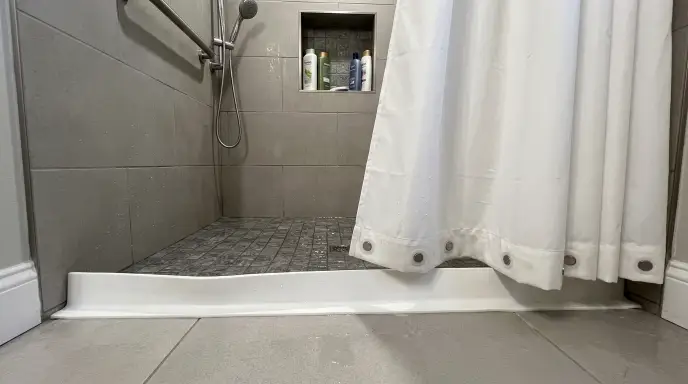
- Weighted Magnetic Hem: Select a heavy-gauge (8–10 gauge) EVA or PEVA liner equipped with encapsulated bottom magnets or heavy silicone weights to prevent billowing and keep water trapped inside the basin.
- Flexible Collapsible Water Dam: Install a flexible silicone threshold strip across the shower pan entrance. It holds standing water inside the shower basin while collapsing flat underfoot or under wheelchair wheels, eliminating tripping edges.
- Stud-Anchored Curtain Rod: Remove spring-tension rods and mount an aluminum rod directly into wall studs using heavy-duty mounting flanges and stainless steel screws. Installing a flexible silicone dam helps contain splashing, which is one of the most effective ways to keep the bathroom floor dry after a shower and stop tile slips.
Safe Glass Shower Door Setup:
- Laminated Architectural Glass: If choosing glass, mandate laminated safety glass rather than standard tempered glass. Laminated glass contains a durable polymer interlayer (PVB) that holds all glass fragments firmly in place if cracked, preventing collapse and laceration injuries.
- Curbless (Zero-Threshold) System: Choose a trackless hanging barn-door style or curbless sliding system where the guide mechanism is suspended from the top header, leaving the floor entry completely flush with the surrounding tile.
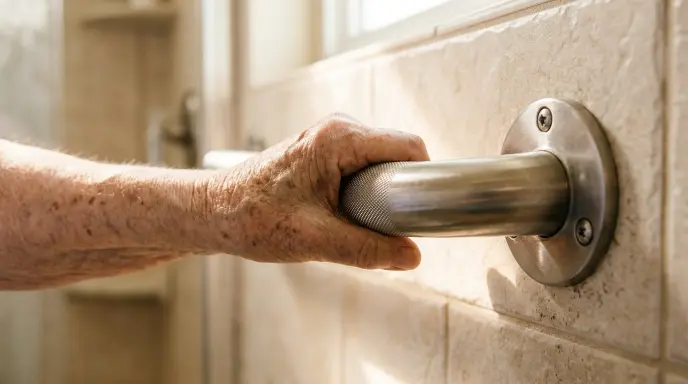
- Independent Grab Bars: Never use door framing as a stabilizing support. Mount dedicated, ADA-compliant, textured grab bars securely into wall framing studs immediately adjacent to the entrance and along the interior wet wall.
The Expert Verdict: Which Setup Fits Your Needs?
- Choose Curtains if: The senior lives with balance challenges, cognitive decline, or limited mobility; uses a walker, shower chair, or wheelchair; or relies on hands-on caregiver bathing assistance. When paired with a wall-anchored rod and a collapsible water retainer, a weighted curtain delivers the highest level of personal safety and emergency access.
- Choose Glass Doors if: The senior is fully independent with consistent balance, prioritizing containment of water spray to prevent slippery tile floors. The enclosure must feature a zero-threshold barrier-free floor entrance, laminated safety glass, and independent, wall-anchored grab bars.
Frequently Asked Questions
Are sliding glass doors safe for a shower chair?
No, standard framed sliding glass doors are unsafe for use with a shower chair. Their raised bottom metal channels create severe tripping hazards during transfers, and the overlapping door panels cut the usable entryway down to under 28 inches, making it difficult or impossible to roll a chair inside cleanly.
What can I put on the floor to keep shower curtain water inside?
A flexible silicone collapsible shower water dam installed along the threshold is the best solution. It contains runoff water inside the shower stall, yet collapses flat when stepped on or rolled over by a walker or wheelchair, eliminating rigid tripping curbs.
Can grab bars be installed directly onto glass shower doors?
No. Glass door panels, metal frames, and towel handles are never engineered to hold dynamic body weight. Grab bars must always be bolted into structural wall studs or reinforced wall blocking, completely separate from shower door hardware.
Is a walk-in shower safer with or without a door?
Occupational therapists universally recognize a zero-threshold (curbless) walk-in shower without a glass door—using a heavy-gauge, wall-anchored curtain instead—as the safest configuration for aging in place. It eliminates shatter risks, removes tripping barriers, and provides unrestricted access for caregivers and emergency responders.


7 Comments