
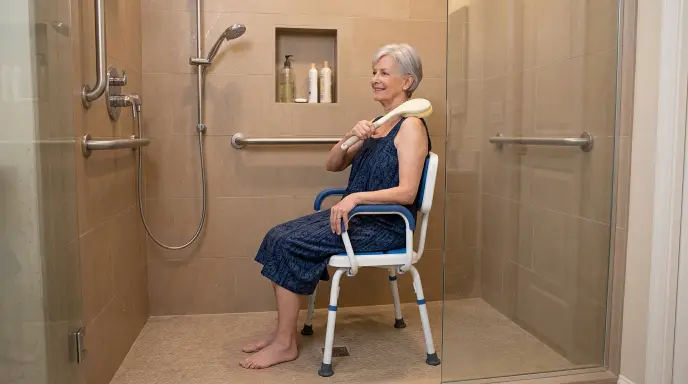
How Seniors Can Wash Feet & Back Safely While Seated (Tools That Eliminate Bending)
The two most dangerous moments during a seated shower happen when reaching the farthest points of the body: leaning forward to wash the feet (a major tipping hazard) and twisting sideways to scrub the back. Both movements shift your center of gravity outside the shower chair’s base, a leading trigger for bathroom falls among seniors who already use seated bathing equipment.
Key Takeaways for Seated Shower Safety
- Zero-Bend Protocol: Ergonomic curved sponges and floor-mounted scrubbers allow thorough cleansing without leaning past the high-risk 30-degree forward angle.
- Targeted Toolset: Rely on a contoured handle for mid-back reach, a suction-anchored floor mat for soles and heels, and a narrow-tip wand for interdigital toe hygiene.
- The Golden Rule: Never lean forward to retrieve a dropped item mid-shower. Utilize built-in wrist lanyards or stage a backup tool within direct reach.
Quick Answer: Seniors can wash their feet and back completely bend-free by combining three adaptive tools: an ergonomically curved long-handled sponge for the back, a floor-mounted suction foot scrubber for the soles, and a tapered long-handled toe washer for between the toes. None of these tools require leaning forward more than a few inches, and all function while the user is fully seated with both feet flat on the shower base.
If you have not yet set up your handheld shower wand for effortless one-handed control, read our guide on handheld shower head setup for seniors first—it pairs directly with the specialized tools outlined below.
Table of Contents
Why Bending Over While Seated in the Shower Is Dangerous
A common assumption in aging-in-place design is that installing a shower chair eliminates all fall hazards. In practice, seated falls remain frequent due to specific biomechanical forces encountered when reaching for the extremities.
1. Loss of Center of Gravity and Chair Tipping
When an individual leans forward past approximately 30 degrees to reach their toes, downward force transfers to the front edge of the seat. This motion can cause the rear legs of the shower bench to lift off the wet, soapy surface. Once rear traction is broken, the chair can kick backward or slide forward abruptly. For comprehensive stability tactics, review our detailed guide on how to stop a shower chair from slipping.
2. Postural Dizziness (Orthostatic Changes)
Lowering the head below heart level while seated can provoke rapid blood pressure shifts, especially for seniors taking antihypertensive medications. This sudden drop triggers orthostatic dizziness or transient vertigo. When the senior attempts to sit upright again, orientation is compromised, frequently resulting in an uncontrolled sideways fall against the shower stall.
3. Hip Precautions and Spinal Limitations
Individuals recovering from hip arthroplasty are frequently placed under strict medical orders prohibiting hip flexion beyond 90 degrees. Similarly, degenerative disc disease, spinal stenosis, and advanced osteoarthritis make spinal rotation agonizing. Scrubbing the thoracic spine without adaptive gear strains spinal ligaments and forces compensatory, unstable postures.
The 3 Essential Adaptive Bathing Tools (Comparison)
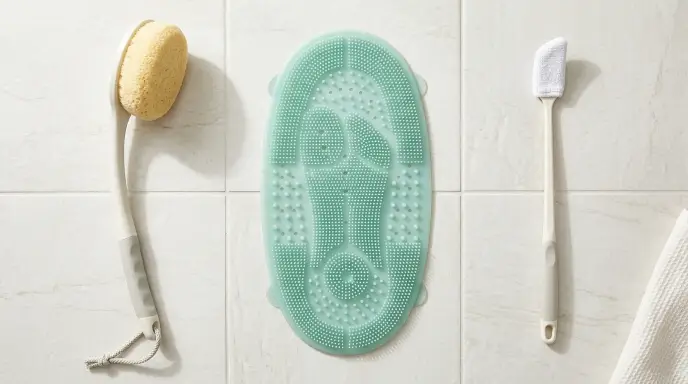
Standard washcloths and short-handled loofahs cannot clean the extremities without extensive torso movement. The table below outlines how specific adaptive aids replace body movement with mechanical reach:
| Tool Type | Primary Target Area | Bending Required? | Best For |
| Curved Long-Handled Sponge | Upper, mid, and lower back | 0% | Limited shoulder mobility, osteoarthritis, post-op precautions |
| Floor-Mounted Suction Foot Scrubber | Soles, heels, plantar surface | 0% | Equilibrium deficits, inability to raise legs, transfer-bench setups |
| Long-Handled Toe Washer & Dryer | Web spaces between toes | Minimal (Knee level only) | Diabetic foot care, fragile skin, fungal infection prevention |
How to Wash Your Back Without Twisting or Straining
Curved Handle vs. Straight Handle: The Anatomical Difference
Standard straight-handled bath brushes appear functional, but human shoulder mechanics limit their utility. Reaching behind the back with a straight stick requires extensive internal rotation and extension of the shoulder joint—movements that deteriorate with age and rotator cuff wear. This mechanical limitation forces users to twist their spine aggressively.
An ergonomically curved shaft mimics the natural contours of the spine. By reaching over the shoulder or along the lower flank, the inward curve keeps the sponge head flat against the middle back without requiring shoulder hyper-extension or spinal rotation.
Ergonomic Grips and Wrist Straps for Arthritic Hands
Slick, soapy plastics demand high pinch-grip strength that can cause pain in arthritic fingers. Choose tools featuring:
- Textured EVA Foam or Ribbed Silicone Grips: Thick-diameter handles that allow a power grip (whole-hand hold) rather than a precision pinch.
- Integrated Wrist Straps: If soapy lather causes the handle to slide out of the hand, the wrist loop catches it instantly. This prevents the tool from falling to the shower floor, completely removing the urge to lean down and pick it up.
Loofah Mesh vs. Dense Foam: Skin Sensitivity Factors
- Dense, Closed-Cell Foam: The preferred surface for seniors over 75, individuals taking anticoagulants, or those with thin, fragile skin. It cleans via gentle surface friction without causing micro-abrasions.
- Loofah Mesh: Suitable only for resilient skin requiring keratolytic exfoliation. Avoid harsh bristle brushes, as hard bristles can cause unseen epidermal tears that invite bacterial infections.
How to Wash Feet & Toes Without Leaning Forward
The Zero-Bend Method: Suction-Cup Floor Foot Scrubbers
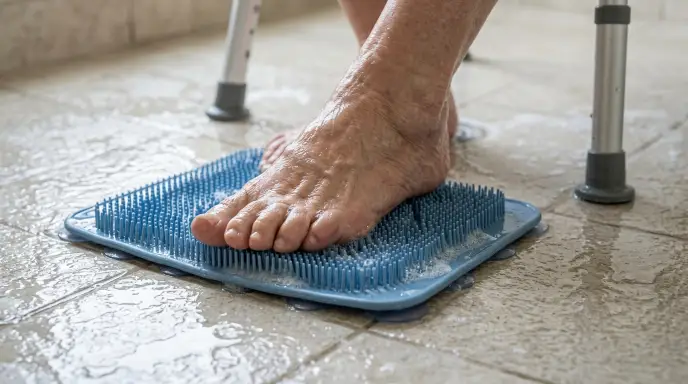
A floor-mounted foot scrubber completely removes the upper body from foot hygiene by delegating the scrubbing motion to the leg muscles.
- Placement: Anchor the silicone mat directly to the shower floor within natural foot reach while seated upright, before turning on the water.
- Execution: While sitting firmly with your back against the chair, apply a small amount of liquid body wash to the mat.
- Action: Place the sole of one foot onto the flexible silicone bristles. Slide the foot forward and backward along the mat. The bristles clean the sole, arch, and sides of the heel using hip and knee flexion alone.
- Surface Compatibility: The underside suction cups require a smooth, non-porous floor to lock firmly. If your shower has rough, non-slip textured tile, ensure the mat has high-traction textured rubber edges that resist lateral slippage even without active suction.
Long-Handled Toe Washers with Narrow Tips
While suction mats clean the plantar surface, they cannot safely scrub the narrow web spaces between individual toes. A long-handled toe washer features a flat, slim wire frame covered by a removable terry-cloth or microfiber sleeve. Because the shaft measures 24 to 30 inches, you only need to lower the tool to knee level to guide the slim pad between each toe.
Critical Foot Hygiene for Diabetic Seniors

For seniors managing diabetes, unwashed or wet feet pose severe clinical risks. Peripheral neuropathy can mask micro-injuries, while poor peripheral circulation slows healing.
- Residue Removal: Soap residue left between toes breaks down skin integrity (maceration). Use the toe wand to rinse thoroughly with clear water.
- Complete Drying: Immediately follow washing by switching to a dry terry-cloth sleeve on the wand. Trapped moisture between toes is the primary driver of fungal tinea pedis and secondary diabetic foot ulcers.
- Visual Checks: Pair this routine with a long-handled shatterproof inspection mirror to monitor the soles for redness, blisters, or calluses without straining.
Step-by-Step Safe Bathing Routine (While Seated)
Establishing a systematic bathing sequence prevents impulsive movements and keeps items within an ergonomic reach envelope.
- Stage Every Tool Before Seated Transfer: Hang your curved back sponge, toe washer, and pump-dispenser soap within arm’s length on a low caddy or grab bar hook. For workstation arrangements, explore our review of shower chair vs. transfer bench for bathtubs.
- Engage the Handheld Wand: Adjust the spray head to a comfortable chest height. Use the wand’s built-in pause slider to interrupt water flow while lathering, keeping the floor visible and reducing rapid soap wash-off.
- Cleanse in a Strict Top-to-Bottom Sequence:
- Upper torso, neck, and arms using a standard washcloth.
- Mid and lower back using the curved long-handled sponge over the shoulder and around the waist.
- Thighs, knees, and calves while seated back.
- Soles and heels using the suction floor mat.
- Interdigital spaces using the long-reach toe wand.
- Dry Seated: Pat the upper body dry while seated, and run a dedicated dry toe-wand sleeve between the toes before standing up to transfer out of the shower.
Hygiene and Maintenance: Preventing Mold and Soap Scum Slippage
- Elevate Tools Immediately After Use: Never leave sponges resting on the floor or the rim of the tub. Residual moisture breeds mold and bacterial colonies quickly. Hang all tools by their lanyards from elevated grab bar hooks to drip-dry, which also aids our proven strategies to keep the bathroom floor dry after showering.
- Degrease Suction Mat Bases: Body oils and soap scum accumulate around suction cups over time, degrading their grip. Lift the floor scrubber weekly, wash the underside with hot water and mild detergent, and inspect the suction cups for tears.
- Adhere to Replacement Intervals: Replace foam pads and toe-washer sleeves every 3 to 6 months. Deteriorating foam loses its mechanical firmness, increases sliding friction against delicate skin, and harbors microbial growth.
Dangerous Shower Mistakes to Avoid
- Retrieving Dropped Objects: If a tool slips from your hand and falls to the floor, leave it. Leaning downward from a wet plastic seat to retrieve an object is the single most common cause of catastrophic chair tipping. Rely on a secondary backup tool, or finish rinsing and retrieve it safely after exiting the shower.
- Using Oily Soaps on Tool Handles: Avoid bar soaps containing heavy oils or moisturizers that leave a greasy film on plastic handles. Use non-greasy liquid soap from a pump dispenser to maintain high handle friction.
- Selecting Heavy Metallic Shafts: Stainless steel or weighted aluminum rods place excessive load on fragile wrist joints. Opt for lightweight, reinforced hollow plastic or aerospace aluminum with high tensile strength and minimal overall weight.
Frequently Asked Questions
Can I use a regular bath brush instead of a curved sponge?
Standard straight-handled bath brushes cannot reach the center of the thoracic spine without forcing the shoulder into uncomfortable extension and internal rotation. This movement pattern strains arthritic joints and frequently causes users to twist their torso dangerously on the shower bench. A specifically curved shaft brings the sponge head flush against the back effortlessly.
How do seniors wash between their toes safely without bending?
Use a specialized long-handled toe washer equipped with a narrow, flat cleaning tip. Because the shaft extends reach by 24 to 30 inches, the user can guide the pad between each toe while sitting fully upright, requiring only minor arm elevation to knee level.
Do suction foot scrubbers work on textured shower floors?
Suction cups require smooth, non-porous surfaces like fiberglass, acrylic, or smooth glazed porcelain to establish a vacuum. On slate, mosaic, or heavily textured anti-slip tiles, suction cups will loosen. For textured floors, choose scrubbers featuring broad, high-friction, weighted non-slip rubber bases rather than vacuum-dependent suction pads.
How do I prevent a wet sponge from slipping out of arthritic hands?
Select tools designed with an integrated nylon or silicone wrist lanyard. Slipping your hand through the loop before lathering ensures that if grip strength tires, the sponge remains secured to your wrist rather than crashing to the shower stall floor.
Maintaining Independence and Shower Safety
Bathing independently with limited mobility relies on smart mechanical advantages rather than physical strain. By utilizing an ergonomic curved back sponge, a floor-anchored suction foot scrubber, and a narrow toe wand, you remove the hazardous bending and twisting motions that cause seated falls.
Once your reaching tools are in place, ensure the structural perimeter of your shower is equally reinforced. Read our complete guide on walk-in shower grab bar placement to finalize your setup, or consult our primary aging-in-place bathroom guide for an overarching room-by-room safety framework. Once you have finished cleaning your feet and back, the next critical step is getting dry without standing on wet, slippery tile. Follow our guide on how seniors can safely dry off after a shower while remaining seated.






7 Comments