
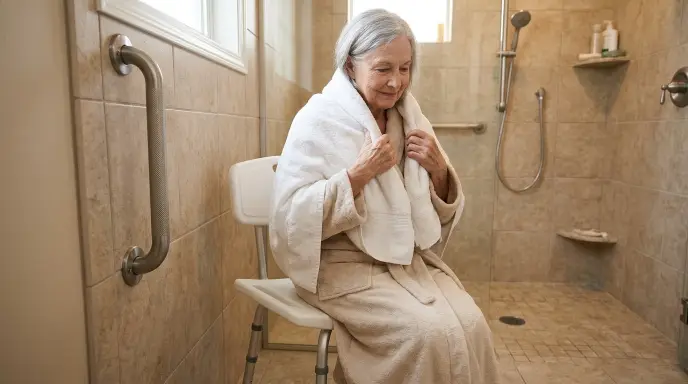
How Seniors Can Dry Off After a Shower Without Standing (Or Slipping)
Drying off seems like the simplest part of bathing—until you look closely at fall statistics. Most bathroom accidents do not happen while the water is running; they occur when stepping out, bending over to reach a towel, or balancing on one wet foot to dry an ankle. For older adults and family caregivers, mastering a safe seated drying routine is not just a convenience. It is a critical fall-prevention strategy.
This guide provides an exact, step-by-step roadmap to drying off completely while seated on a shower chair or bench, explains why traditional towels cause hidden joint strain, evaluates the best low-effort drying tools, and shows you how to exit the shower without ever putting yourself at risk.
Quick Answer: The Safest Way to Dry Off After a Shower
You should never stand up wet to dry off. The safest method is to dry your entire body while remaining completely seated on your shower chair or bath bench, using passive-drying garments and reacher tools that eliminate bending and twisting.
- Turn off the water first, then pat dry your head, face, arms, and torso while sitting safely inside the stall enclosure.
- Dry your feet and lower legs without bending down by resting your ankle across your opposite knee, stepping onto a heavy microfiber floor mat, or using a long-handled wand.
- Replace heavy bath sheets with a heavyweight terry cloth bathrobe that absorbs water passively without requiring aggressive rubbing or arm twisting.
- Only stand up once your skin, hands, and shower seat are completely dry, ensuring you maintain a non-slip grip on dry grab bars.
Table of Contents
Why Standing to Dry Off Is the Most Dangerous Part of Bathing
Many seniors and caregivers assume that stepping into the tub or washing hair is the most hazardous part of shower time. In reality, post-shower transitions create a compound set of physical hazards.
1. The Physics of Post-Shower Slips
Freshly washed skin retains a microscopic film of water, bath oils, and dissolved soap. This barrier has significantly less traction than dry skin. When you stand up wet, your feet lubricate the floor surface. If you try to pull a heavy bath sheet behind your shoulders or bend forward to catch a drop of water on your shin, your center of gravity shifts abruptly outside your base of support. Without a dry footing or a firm handhold, a sudden slip becomes almost impossible to correct.
2. The Orthostatic Drop and “Bending Down” Hazard
Reaching down toward your toes or ankles forces your head below your heart level. For seniors managing high blood pressure, taking beta-blockers, or living with postural orthostatic tachycardia, returning upright causes an instantaneous dip in arterial blood pressure. This blood pressure drop triggers sudden lightheadedness or vertigo. Experiencing dizziness inside an enclosed, hard-tiled bathroom often leads to catastrophic falls—even if your feet never lost grip on the floor.
3. Cumulative Fatigue (Stamina Depletion)
Bathing is an intensive cardiovascular and muscular workout for older adults. Warm water widens peripheral blood vessels, which lowers systemic blood pressure and increases cardiovascular workload. By the time washing and rinsing are finished, muscle stamina and balance reactions are severely depleted. Expecting a senior to balance on one leg while drying off after an exhausting shower invites muscle failure.
The Golden Rule: The 100% Seated Drying Routine (Step-by-Step)
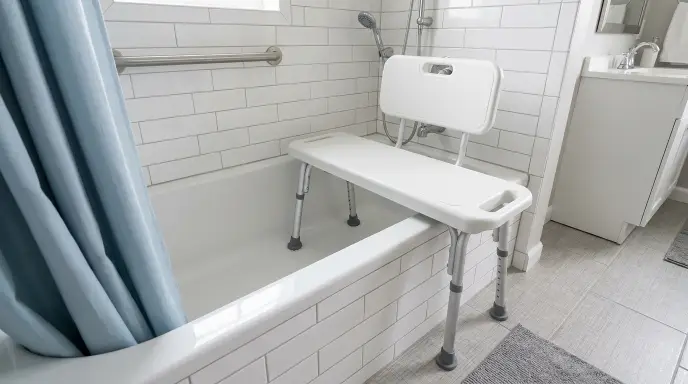
To eliminate fall risks, keep your body supported on your chair or bench until you are completely dry and ready to put on clothing. If you haven’t already set up your seating correctly, review our instructions on how to use a tub transfer bench safely and ensure you stop your shower chair from slipping beforehand.
Step 1: Prep Before the Water Turns On (The “Arm’s Reach” Setup)
Before you turn the water on, place your drying tools, robe, and a small dry hand towel within comfortable arm’s reach of the shower chair. You should never lean out, twist around, or stand up mid-routine to grab a towel from an exterior hook or rack.
Step 2: Dry from the Head Down While Still in the Stall
Shut off the shower faucet completely. Remain seated in your chair. Take a small, lightweight towel and gently pat your head, face, neck, chest, and arms dry. Keeping this initial step inside the enclosure takes advantage of the warm ambient air inside the stall, preventing chills while keeping dripping water contained within the shower pan.
Step 3: The “Towel Under the Arms” Technique for the Back
Trying to sling a bath towel diagonally over one shoulder and behind your lower back requires extreme shoulder rotation and neck strain.
- Hold the top two corners of your bath towel in front of your chest.
- Duck your head forward slightly and drape the towel over your back, letting both ends hang forward under your armpits.
- Grip the dangling front corners and pull the towel back and forth across your shoulder blades and lower back in a smooth, rhythmic motion—much like shining a shoe.
- Your back gets dry without your shoulders ever rotating behind your torso.
Step 4: Drying Feet and Legs Without Bending Over
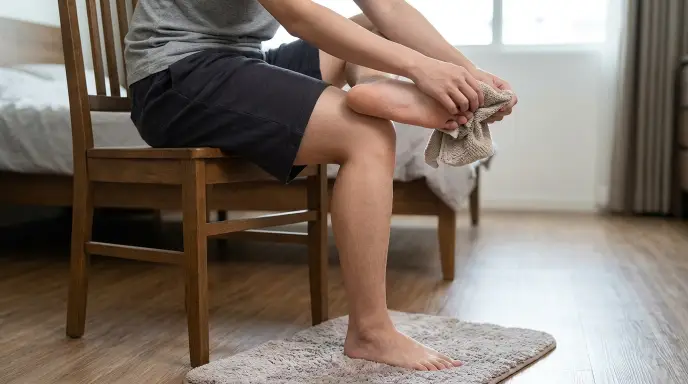
Never bend over from the waist while seated to reach your toes. This compresses your diaphragm and strains your lower spine. Instead, use one of two safer methods:
- The Figure-4 Leg Cross: Lift your right foot and rest your right ankle across your left knee or thigh. This brings your foot to lap level, letting you easily dry between each toe, inspect your heels, and dry your soles without bending. Repeat for the left foot.
- The Passive Step-and-Dry Mat: If hip stiffness or arthritis prevents crossing your leg, place a thick, non-slip microfiber mat right beneath your feet. Rub the soles of your feet against the dense microfiber loops while seated. If you use adaptive reaching tools to wash (such as those outlined in our guide on how to wash feet and back while seated), you can wrap a dry washcloth around the same curved wand to dry between your toes.
The Easiest Hack: Switch from Towels to a Heavyweight Terry Cloth Bathrobe
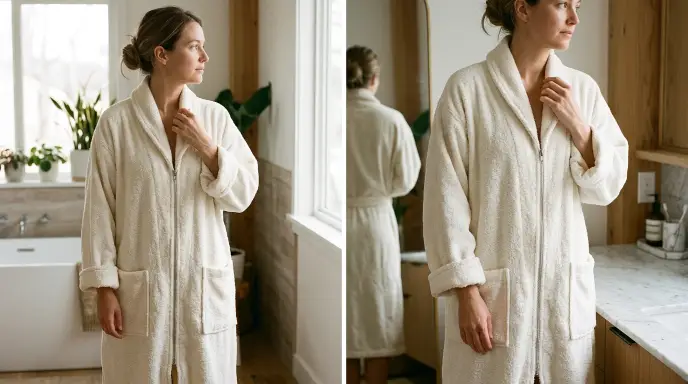
Traditional bath sheets demand high grip strength, coordinated wrist extension, and repetitive shoulder movement. For seniors dealing with osteoarthritis, carpal tunnel, or rotator cuff tears, manipulating a six-foot towel is exhausting.
The most effective alternative is switching to passive drying with an absorbent terry cloth robe.
How a Towel Robe Works
Instead of rubbing your skin repeatedly, you put on a thick robe immediately after shutting off the water. The garment’s dense loops wick away surface moisture passively while you sit comfortably on your shower seat.
What to Look For:
- Closure Type: Choose large front zippers, snap buttons, or magnetic closures. Avoid traditional tie belts, which easily slip loose and are frustrating for arthritic fingers to knot.
- Fabric Weight: Look for 400 to 500+ GSM (grams per square meter) 100% cotton terry cloth. This weight absorbs gallons of water rapidly without feeling soaked through.
- Length: Look for mid-calf to ankle length to keep lower legs warm and dry without creating a hem trip hazard when you eventually stand.
Comparison: Traditional Towels vs. Adaptive Drying Aids
| Drying Method | Balance Risk | Upper Body Strain | Bending Required | Best Suited For |
| Traditional Bath Sheet | High (Requires twisting & reaching) | High (Continuous shoulder and wrist pulling) | Yes (Must bend to reach feet and shins) | Fully independent adults with steady balance |
| Terry Cloth Robe (Zip-Front) | Zero (Worn while fully seated) | Minimal (Simple slip-on design) | None (Absorbs moisture automatically) | Seniors with arthritis, shoulder fatigue, or low stamina |
| Long-Handled Drying Wand | Low (Used from seated position) | Low (Extended reach handles do the work) | None (Reaches feet and back effortlessly) | Seniors with limited hip mobility or back pain |
| Step-and-Dry Microfiber Mat | Low (Used from seated position) | Zero (Feet scrub against mat) | None (Foot stays on the floor) | Anyone prone to dizziness or blood pressure drops |
| Full-Body Air Dryer | Low (Mounts to wall or stall) | Zero (Touch-free warm airflow) | None (Warm air circulates freely) | Seniors with fragile skin, severe tremor, or zero grip strength |
Specialized Tools to Dry Hard-to-Reach Areas
If mobility limits make standard drying difficult, incorporating a few targeted adaptive tools ensures full independence:
- Long-Handled Towel Holders / Drying Wands: These lightweight extended poles feature flexible silicone prongs or clips on the end to secure a dry washcloth. They let you dry your back, calves, and bottom of your feet without straining your spine or twisting your shoulders.
- Microfiber Step-and-Dry Floor Towels: Unlike thin standard towels that bunch up into trip hazards, dedicated step-and-dry mats use non-slip rubber backing paired with high-pile microfiber chenille. Placing one directly under your shower stool allows you to dry your soles completely through simple, seated foot friction.
- Warm-Air Body Dryers: Installed on the wall or ceiling of the shower stall, these units blow a controlled stream of gentle, warm air downward. They eliminate the friction of toweling altogether, making them invaluable for fragile, paper-thin senior skin prone to skin tears.
How to Safely Transition from the Shower Chair to Dressing
The final stage of the bathing process is standing up and moving to your clothes. This is where most slips happen if moisture has not been managed properly.
The “Palm and Seat” Dry Check
Before placing your feet underneath you to stand, take a dry hand towel and wipe two critical surfaces:
- The palms of your hands: Wet hands will slide straight off grab bars and armrests.
- The seat surface in front of you: A slick seat allows your thighs to slide unexpectedly as you push upward.
Using Grab Bars Correctly
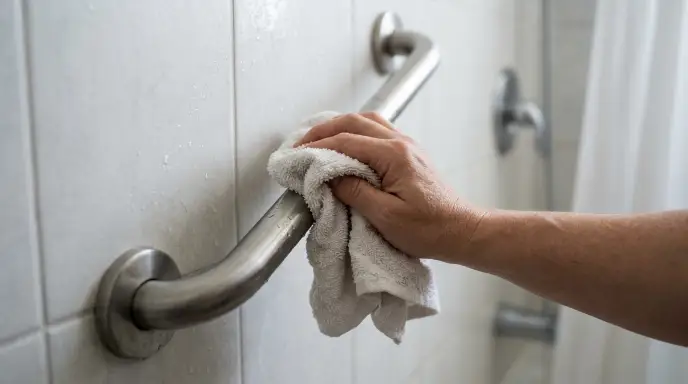
Never pull yourself up using a wet washcloth rack, a glass shower door handle, or an unanchored soap dish. Grip your securely anchored, textured grab bar. Before putting your full body weight onto the bar, verify that the grab bar tubing is completely dry. If your bathroom lacks secure handholds in this zone, check our standard grab bar placement guide for proper mounting heights and locations.
Keep the Floor Clear and Dry
Stepping onto puddles outside the shower tray creates an immediate slip hazard. Make sure your bathroom floor has an effective drainage path and non-slip mats. To protect your walkways daily, implement the moisture barriers outlined in our guide to keep bathroom floors dry after a shower and ensure you are using certified non-slip bathroom rugs for seniors.
Why Dressing Seated Is Mandatory
Never attempt to step into underwear, trousers, or socks while standing up in the bathroom. Balancing on one leg while the other foot threads through a pant leg causes hundreds of senior fall injuries every year. Transition directly from your shower seat to a sturdy, dry bathroom chair or your bedroom mattress, and put on all garments from a seated, stable position.
5 Common Mistakes Seniors Make When Drying Off
- Leaving the Towel Across the Room: Stretching outside the shower curtain to grab a towel sitting on the vanity counter shifts your center of gravity while standing on wet tile.
- Putting on Slippers While Feet Are Damp: Trapped water inside non-breathable slipper linings creates internal foot slipping and increases fungus or skin breakdown risks.
- Standing on a Dropped Towel: Tossing a used, wet towel onto the bathroom tile and standing on it does not protect against slips—it creates a loose, sliding fabric surface with zero floor traction.
- Aggressive Towel Rubbing: Aging skin is thinner and produces fewer protective natural oils. Vigorous scrubbing with coarse terry cloth causes friction tears and capillary bruising. Always use a gentle “pat, don’t rub” approach.
- Rushing the Stand-Up Transition: Standing up the instant the water shuts off causes blood pressure to plummet from sudden heat dissipation. Sit still for at least 60 seconds after turning off the water to let your cardiovascular system regulate.
Frequently Asked Questions
Can you dry off completely while sitting in a shower chair?
Yes. By placing a heavy terry cloth robe and drying aids within arm’s reach, you can dry your hair, upper torso, back, and lower limbs while remaining seated. Using seated leg crossing or a non-slip floor mat allows you to dry your feet without ever standing while wet.
What is the best towel for an elderly person with limited mobility?
A heavyweight (400+ GSM) 100% cotton terry cloth bathrobe with a front zipper or magnetic closures is significantly safer than a loose bath sheet. It absorbs moisture passively without demanding shoulder rotation, wrist grip, or heavy rubbing.
How do seniors dry between their toes without bending down?
The safest method is resting one ankle across the opposite knee while seated (the Figure-4 position). If joint flexibility is limited, use a long-handled wand clamped to a dry washcloth, or rub your soles and toes against a textured microfiber step mat placed right beneath your shower chair.
Is a body dryer safe for seniors to use in the bathroom?
Yes. Warm-air body dryers designed for residential bathrooms are exceptionally safe and effective. They reduce fall risks by removing the need to reach or bend, and they prevent skin tears by drying sensitive skin without abrasive towel friction.
Once you are completely dry and your feet are shielded with slip-resistant footwear, do not attempt to stand up and pull on clothes immediately. Review our next step-by-step guide on how seniors can dress safely after a shower to avoid losing balance while putting on pants and socks.




7 Comments