
Bathroom Fall Alert Placement: How to Call for Help from the Shower or Floor
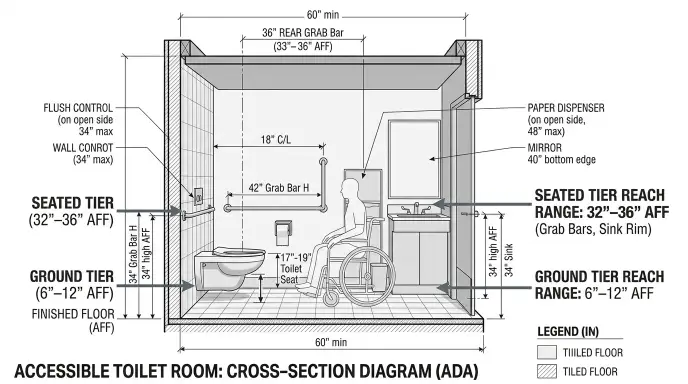
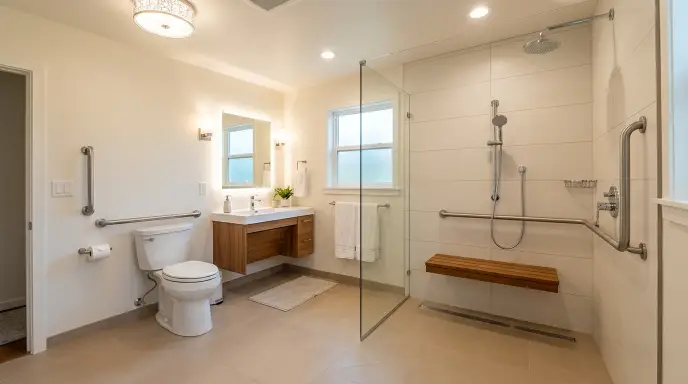
Choosing the right bathroom fall alert placement is critical for senior home safety. Mount emergency buttons at two distinct heights: 6 to 12 inches from the floor for an immobilized person lying down, and 32 to 36 inches from the floor for someone seated on the toilet or shower bench. If using an emergency pull cord, the bottom handle must hang 4 to 6 inches above the floor. A single wall button installed at standing height leaves an injured senior completely trapped.
Quick Reference: Bathroom Fall Alert Placement Dimensions
| Bathroom Zone | Recommended Height | Ideal Device Type | Target Scenario |
| Shower Stall (Seated) | 36–40 inches | Waterproof push button (IPX7+) | Seated reach from shower chair |
| Shower Stall (Floor Backup) | 6–9 inches | Waterproof pull cord or low button | Prone/floor reach after slip |
| Beside Toilet | 32–36 inches | Wall-mounted push button | Easy reach while seated |
| Open Floor / Baseboard | 8–12 inches | Low wall button or hanging pull cord | Reaching while lying flat |
| Outside Door Frame | 48–60 inches | Visual strobe & audio buzzer | External caregiver notification |
The Two-Tier Rule for Bathroom Fall Safety
Every accessible bathroom requires a dual-level safety net:
- The Seated Tier: Positioned at waist height (32 to 36 inches) to address sudden dizziness or weakness while on the toilet or shower bench.
- The Ground Tier: Positioned just above the baseboard (6 to 12 inches) so an individual unable to stand can trigger it directly from the tile.
Installing a single button near the main light switch creates a dangerous blind spot in a real emergency.
The Bathroom Fall Blind Spot: Why Standard Alert Pendants Fail
Medical alert systems frequently fail to prevent prolonged post-fall immobilization inside the bathroom for three critical reasons:
- The Pendant Removal Habit: Older adults routinely remove necklaces or wristbands before bathing. Even water-rated wearables are taken off due to habit, skin irritation, or discomfort, leaving the unit on the counter out of arm’s reach.
- The Immobilization Reality: High-impact slips on hard surfaces frequently cause hip fractures, head trauma, or acute vertigo. An immobilized adult cannot stand or crawl up to reach a standard wall-mounted intercom placed at 48 inches.
- Moisture & Steam Degradation: Standard call buttons not built for wet environments fail under continuous shower steam. Internal contacts corrode, battery housings oxidize, and devices stop functioning without warning.
Reliable fall safety requires permanent hardware mounted at the physical points where a fall actually lands.
Zone-by-Zone Placement Guide
Zone 1: Inside the Wet Shower Stall
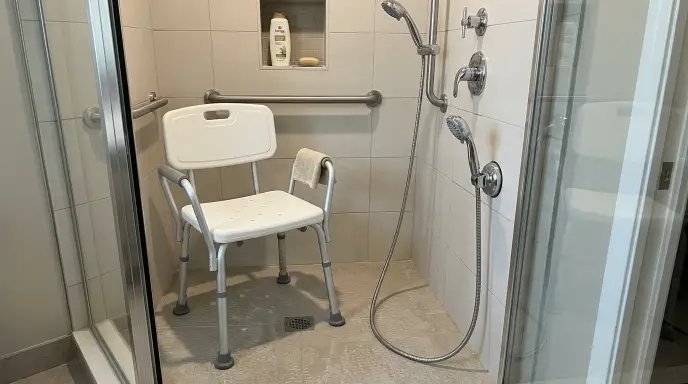
Install the primary seated button on the side wall, outside direct water spray but within arm’s reach of the shower chair or transfer bench. Reaching sideways requires minimal torso rotation, which helps maintain seated balance.
For the floor-level shower backup, keep the button 6 to 9 inches off the shower floor. Mounting lower than 6 inches leaves the hardware exposed to standing or pooling water.
Waterproof Standard: Never install IPX4 (splash-rated) units inside the shower enclosure. Use devices certified at IPX7 (immersion up to 1 meter for 30 minutes) or IPX8 to ensure continuous performance against daily high-pressure steam and warm spray.
Zone 2: Beside the Toilet (The Stand-to-Sit Transition)
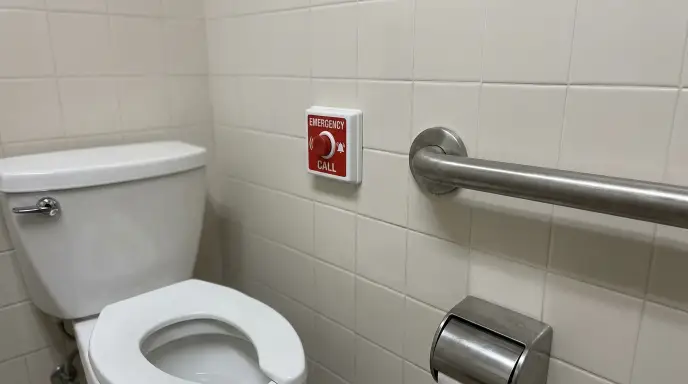
Falls frequently occur during the sit-to-stand transition due to orthostatic hypotension (sudden drops in blood pressure).
- Mount this button 32 to 36 inches above the floor, parallel to the front edge of the toilet seat.
- Keep the button physically separated from wall-mounted grab bars. Placing an alert button directly next to a grab bar can lead to accidental presses.
Zone 3: Floor-Level Wall Buttons & Pull Cords

For pull cord assemblies, cord length determines overall utility:
- The 4 to 6-inch sweet spot: The pull cord handle must hang 4 to 6 inches above the finished floor.
- Why this matters: If the cord rests on the floor, it absorbs water, collects grime, and risks electrical shorts. If it hangs higher than 6 inches, a senior lying flat on the floor with limited arm extension cannot grasp it.
Types of Bathroom Emergency Signaling Systems
1. Waterproof Wall-Mounted Panic Buttons
Compact, sealed units powered by long-life lithium batteries.
- Permanent installations require stainless steel screws sealed with silicone.
- Rental units should utilize marine-grade waterproof VHB mounting tape instead of basic foam adhesive.
2. Traditional Pull Cord Systems with External Strobe
A cord pull inside the bathroom activates an external high-decibel siren and flashing red LED strobe outside the door. This setup alerts caregivers in adjoining rooms who may be hard of hearing or watching television.
However, triggering an alarm does not help if rescuers are stuck in the hallway. Ensure your entry point is rescue-ready by preventing bathroom door traps with outswing hinges and emergency locks.
3. Voice-Activated Smart Units
Voice assistants allow hands-free emergency calling without physical movement.
- Limitation: Running shower water creates acoustic interference that can prevent microphones from picking up distress phrases. Voice units should serve as a secondary system, not the primary lifeline.
4. Waterproof Silicone Wristbands
Unlike neck lanyards—which can snag on grab bars or shower tracks during a fall—medical-grade silicone wristbands stay secured to the wrist during hair washing and transfers.
How to Signal for Help Without Monthly Subscriptions
You can set up a dependable bathroom alert network without ongoing service contracts:
- In-Home Caregiver Pagers: A wireless transmitter button in the bathroom sends a high-frequency radio signal (50–150 ft range) directly to a portable chime carried by a caregiver. It operates on a one-time hardware purchase with zero recurring costs.
- Wi-Fi Auto-Dialers: Wall-mounted smart buttons connected to the home network send instant SMS alerts or automated phone calls to family contacts when triggered. These require a reliable Wi-Fi network and backup power.
Post-Fall Protocol: What to Do If You Cannot Reach Any Button
When a fall leaves an alert button or pull cord completely out of reach, use these emergency actions:
- The “Bang and Echo” Signal: Avoid exhausting lung capacity by shouting behind a closed door. Take a firm object (a shoe heel, plastic bottle, or cane) and strike the base of an exposed metal water pipe or the hollow apron of the bathtub. Follow a rhythm of three sharp knocks, pause, and repeat. Pipe vibrations travel through household walls significantly better than vocal cries.
- The Insulated Roll: Cold tile floors rapidly drop body core temperature. If moving causes no severe pain, roll slowly onto a non-slip bath mat, towel, or laundry pile. Avoid moving toward the shower drain where water pools; focus on insulating your core from cold ceramic tile while waiting for help.
Frequently Asked Questions
Will bathroom humidity cause false alarms on electronic buttons?
No, provided the device carries an IPX7 or IPX8 waterproof rating. Fully sealed switches use hermetic gaskets and membrane contacts that ignore ambient moisture. False alarms almost always indicate an unsealed IPX4 or indoor-only device that has absorbed condensation.
Can I stick an emergency button to shower tiles with adhesive?
Yes, but standard double-sided foam tape degrades within weeks under hot, soapy water. Use industrial acrylic waterproof tape (such as 3M VHB). Clean the tile with isopropyl alcohol, allow it to dry thoroughly before application, and inspect the adhesive perimeter every three months.
What happens if the person falls and becomes unconscious?
Manual buttons and pull cords require active motor function. For seniors prone to syncope, sudden blood sugar drops, or seizures, install low-level wall buttons for conscious slips, and pair them with an automatic fall-detection wearable that alerts emergency contacts via internal accelerometers if an impact is detected without subsequent movement.




8 Comments