

How Seniors Can Dress Safely After a Shower (Without Losing Balance)
Quick Answer: How to Dress Safely After Bathing
To prevent post-shower dressing falls, follow these four rules:
- Clear Steam First: Run the exhaust fan to eliminate damp surfaces and lower humidity.
- Dry Off 100%: Never dress with damp skin or wet feet to avoid fabric friction.
- Dress While Seated: Sit on a sturdy, firm chair—never stand on one leg to thread clothing.
- Use Adaptive Tools: Use sock aids, reachers, and long-handled shoehorns to avoid forward bending.
This single transition—the brief window between stepping out of the shower and getting fully dressed—causes far more falls among seniors than most people realize. It is rarely just about a slick floor. It is the dangerous combination of damp skin, a fogged-up bathroom, warm-water dizziness, and the instinctive reflex to balance on one leg while pulling up pants.
The “Hidden Fall Risk” in Senior Bathrooms
Everyone warns older adults about slipping inside the shower stall. Almost no one warns them about the danger that follows immediately.
During dressing, a senior is usually alone, unsupported, standing on damp tiles, and trying to pull tight fabrics over sticky skin. This transition is where balance collapses. In occupational therapy and senior care, many documented “bathroom falls” are actually dressing falls.
Who This Guide Is For
- Seniors dedicated to maintaining their personal independence safely.
- Adult children and caregivers seeking practical, zero-cost home modifications.
- Anyone looking for occupational therapy-backed adaptive dressing techniques.
Table of Contents
Why Dressing After a Shower Triggers Severe Fall Risks
1. Physical Factors: Friction & Blood Pressure Drops
- Skin Friction: When skin remains even slightly moist, dry fabrics cling. Tugging hard against that friction shifts your center of gravity unexpectedly.
- Post-Shower Orthostatic Hypotension: Warm water dilates blood vessels to shed body heat. Transitioning quickly from warm water to standing causes blood pressure to plunge, inducing sudden lightheadedness or vertigo.
2. Environmental Traps
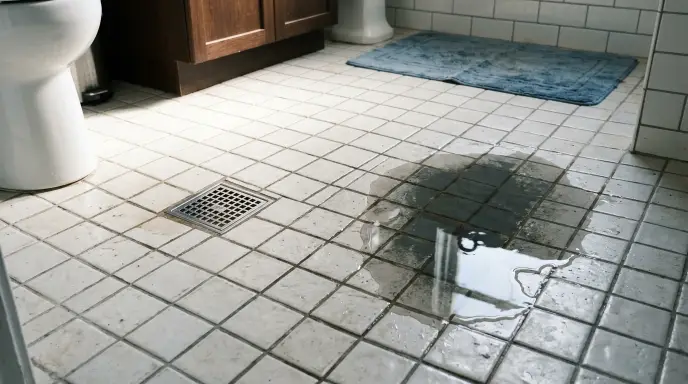
A humid, foggy room creates an invisible film of condensation on floors, grab bars, and counters. When hot mist lingers, bare feet lose traction instantly.
3. The “One-Leg Balancing Trap”
Lifting one foot to step into underwear or trouser legs is the single most dangerous dressing habit. It demands rapid ankle stabilization, hip strength, and vestibular balance—three physical faculties that naturally decline with age or medication use. A momentary wobble while on one foot almost always results in a hard fall.
The Pre-Dressing Safety Checklist
Preparation costs nothing and prevents the majority of balance accidents. Set up your space before turning on the water:
- Turn on exhaust ventilation: Run the fan or crack the bathroom door before showering to prevent condensation build-up.
- Stage dry clothes at waist height: Lay out your underwear, trousers, and top on a dry counter or chair where you won’t need to bend or reach.
- Position grip footwear by the exit: Place slip-resistant slippers or grip socks directly where your feet will land.
- Keep dressing aids within arm’s reach: Position reachers and sock aids right next to your designated dressing seat.
Ensure your body and feet are thoroughly dried before dressing. For the safest drying sequence, review our complete guide on how to dry off after a shower safely as a senior.
Step-by-Step: The Safest Seated Dressing Technique
Always dress while seated. Follow this 5-step occupational therapy routine:
Step 1: Choose a Firm, Stable Seat
Do not sit on the edge of a soft bed; soft mattresses sink unevenly and throw off pelvic balance. Instead, use your shower transfer bench or a sturdy, high-back vanity chair positioned outside the damp stall.
Step 2: Put on Grip Socks or Slippers Immediately
Never touch tile floors with bare, damp feet. After drying between every toe, immediately slide into non-slip grip socks or supportive rubber-soled slippers before dealing with clothing.
Step 3: Slide Undergarments and Pants Up While Seated
While keeping both buttocks planted firmly on the chair:
- Bend at the knee (not the waist) to bring your foot up, or use a dressing aid.
- Thread both feet completely through your underwear and trousers.
- Pull the garments up past your calves and over your knees up to your mid-thigh.
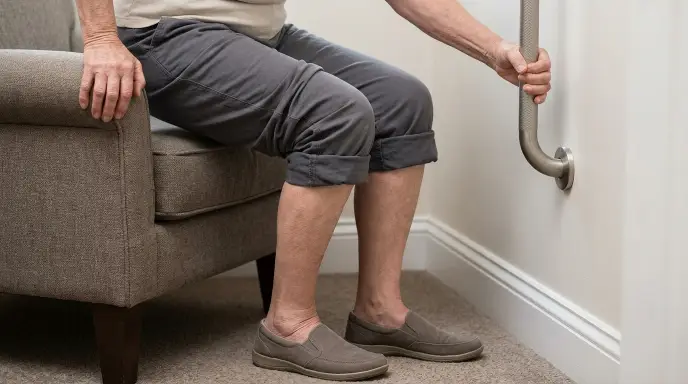
Step 4: The Safe Stand-and-Pull Transition
Once garments are above your knees:
- Plant both feet flat and shoulder-width apart on a non-skid rug.
- Place one hand firmly on a wall grab bar or sturdy chair armrest.
- Stand straight up smoothly.
- Once fully balanced, use your free hand to pull pants up over your hips and fasten them.
Step 5: Put on Upper Body Clothes
Select loose-fitting tops or front-buttoning shirts. Avoid tight pullovers that force you to raise both arms overhead, which temporarily blocks vision and shifts upper-body balance.
Standing on wet feet to brush teeth or fix hair leads to fatigue and dizziness. Consider transitioning to a seated routine with an accessible senior vanity with knee clearance.
Essential Adaptive Dressing Aids for Seniors

Low-cost assistive devices remove bending, stretching, and single-leg balancing from your daily routine:
| Tool Name | Best Used For | Fall Prevention Benefit |
| Sock Aid | Putting on socks without bending forward | Keeps torso upright; prevents dizziness from bending |
| Long-Handled Shoehorn | Slipping into supportive shoes effortlessly | Eliminates stooping down or crouching |
| Dressing Stick / Reacher | Pulling up pant legs & hooking belt loops | Eliminates overreaching and painful torso twisting |
| Button Hook & Zipper Puller | Managing small buttons and back zippers | Reduces hand strain that distracts from posture and balance |
Adaptive Clothing Options
- Magnetic or Hook-and-Loop Closures: Eliminates fidgeting with small buttons while standing.
- Elastic-Waist Trousers: Pull on quickly without requiring balance to thread belts or zippers.
- Front-Closure Bras/Tops: Eliminates behind-the-back twisting that compromises spinal alignment.
Crucial Modifications for the Dressing Zone
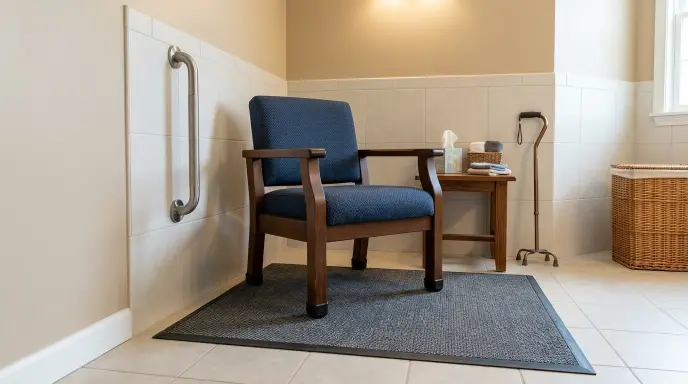
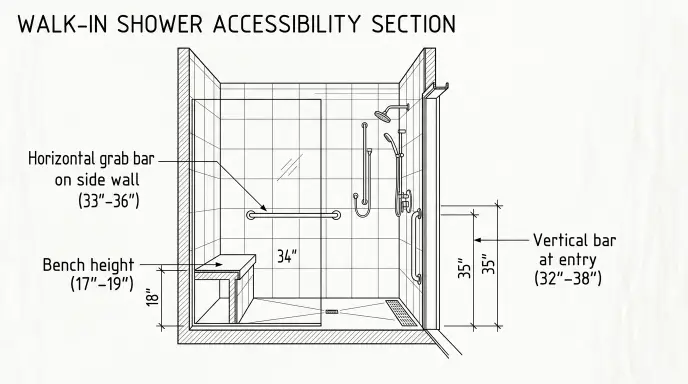
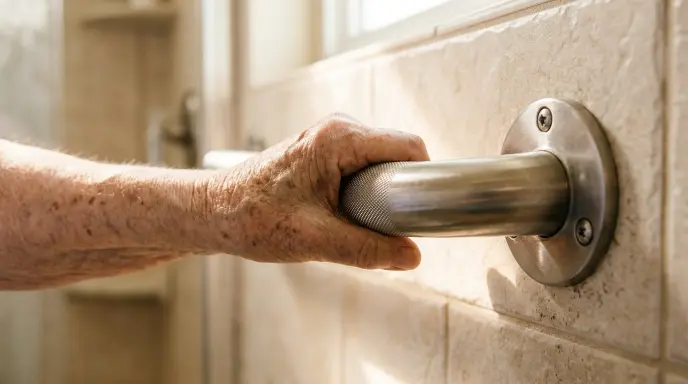
- Install Dedicated Grab Bars: A vertical or horizontal grab bar near the dressing chair provides stability during the seated-to-standing transition. For height and stud positioning, check our grab bar placement guide for seniors.
- Place Non-Skid Rugs Underfoot: Keep an ultra-absorbent, non-slip mat directly underneath your dressing seat. See our tested recommendations in bathroom rugs for seniors.
- Upgrade Task Lighting: Dim lighting causes squinting and bad posture when dealing with fasteners. Review our advice on bathroom lighting for aging eyes.
Frequently Asked Questions (FAQ)
Is it safer to dress inside the bathroom or in the bedroom?
If your bathroom retains steam or water pools on the tiles, it is significantly safer to put on a robe and grip slippers, then move into a dry, well-ventilated bedroom to finish dressing on a sturdy chair.
What should a senior do if they start feeling dizzy while dressing?
Immediately sit back down on the sturdy seat, lower your head slightly, breathe slowly, and grip an armrest or grab bar. Never attempt to push through lightheadedness while standing. If this happens frequently, consult a doctor regarding orthostatic hypotension.
How can someone with arthritis put on pants easily?
Use a dressing stick to hook the waistband and pull the pants up the legs while remaining seated. Opt for pants with wide, elastic waistbands to eliminate the finger pinch strength required for zips and buttons.

5 Comments