
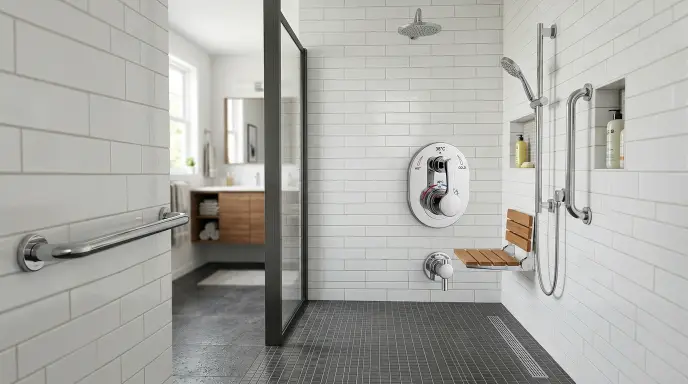
Stop Shower Scalds: Anti-Scald Valve Guide for Seniors
Quick Answer: What You Need to Know
As we age, skin becomes thinner, and reflexes slow down, meaning an older adult can suffer a severe third-degree burn in just a few seconds of hot water exposure. An anti-scald valve automatically regulates sudden temperature spikes, making it an essential shower safety upgrade for seniors aging in place. An anti-scald valve automatically regulates sudden temperature spikes, making it an essential upgrade in any comprehensive aging-in-place bathroom modification plan.
Table of Contents
Why Seniors Are at High Risk of Shower Scalds
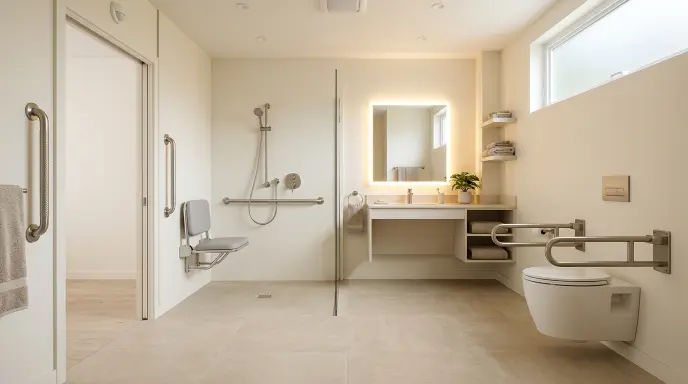
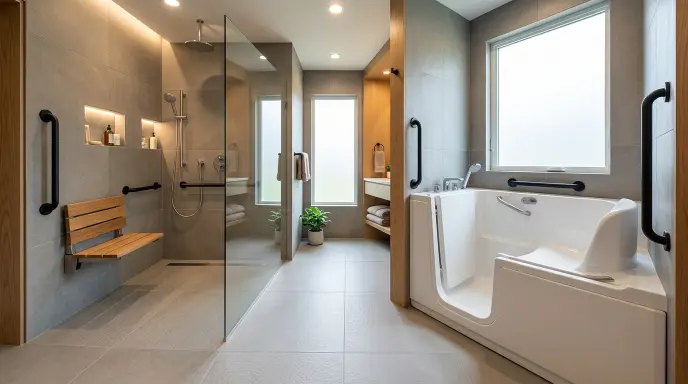
Shower scalds are a predictable, preventable hazard rooted in the biology of aging. Addressing water temperature alongside broader senior bathroom safety strategies is the first step toward proper home protection. Scalding does not just happen in the tub; sink faucets are equally dangerous when washing hands. Combining thermostatic mixing valves with senior-friendly vanity faucets and sink design provides comprehensive burn protection. Because users must sit inside while the water fills or drains, temperature regulation is especially vital across bathing options like walk-in showers and tubs.
Thinner Skin and Slower Reflexes
As skin ages, it loses collagen, elasticity, and subcutaneous fat:
- Faster Injury: Older skin sustains deeper burns at lower temperatures and in significantly less time than younger skin.
- Reduced Sensitivity: Decreased nerve sensation means a senior may not realize the water is scalding until tissue damage has already occurred.
- Delayed Reaction Time: Slower motor reflexes extend the duration of exposure before the person can step back or adjust the faucet.
The “Toilet Flush” Shock (Thermal Shock Risk)
In homes with traditional plumbing, sudden water pressure drops create dangerous thermal spikes:
- A senior is taking a shower.
- Someone flushes a toilet or runs a washing machine elsewhere in the house.
- The cold water supply drops abruptly.
- Scalding water surges through the showerhead without warning.
This sudden burst not only causes burns—it frequently triggers slips and falls as the bather jumps backward on wet tile, dramatically increasing the risk of slippery bathroom floor injuries.
Safe Water Temperature Benchmark for Seniors
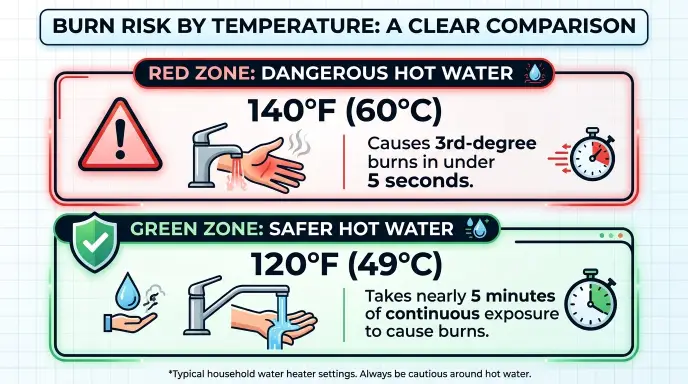
The U.S. Consumer Product Safety Commission (CPSC) recommends setting residential water delivery to 120°F (49°C):
- At 140°F (60°C): A third-degree burn occurs in under 5 seconds.
- At 120°F (49°C): It takes nearly 5 minutes of continuous contact to cause a similar burn.
Types of Anti-Scald Valves: Which One Is Best for Seniors?
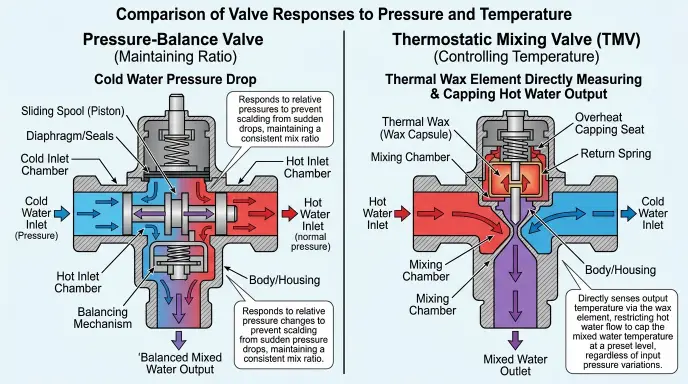
Anti-scald safety devices fall into three primary categories depending on budget, mobility needs, and plumbing setup.
| Valve Type | Working Mechanism | Best For | Installation Complexity |
|---|---|---|---|
| Pressure-Balance Valves | Equalizes hot and cold water pressure to stop sudden surges | Budget-friendly safety for independent seniors | Moderate (In-wall installation) |
| Thermostatic Mixing Valves (TMV) | Directly senses and regulates actual water temperature | Seniors with dementia, Alzheimer’s, or neuropathy | Moderate to Professional |
| Retrofit / Showerhead Valves | Restricts or stops flow when temperature passes a set limit | Renters, apartments, or quick DIY fixes | Very Easy (Tool-free, screw-on) |
Pressure-Balance Valves
These valves balance incoming cold and hot water pressure. If cold water drops suddenly, the valve reduces the hot water flow proportionately to maintain the temperature ratio.
- Limitation: They only monitor pressure, not actual heat. If the water heater itself is set dangerously high, a pressure-balance valve will not lower the temperature.
Thermostatic Mixing Valves (TMV): The Gold Standard
TMVs use an internal wax element that expands and contracts with water temperature. They maintain a strict maximum temperature cap, regardless of pressure fluctuations elsewhere in the plumbing system.
- Why TMVs are best for cognitive decline: Seniors living with dementia may turn the handle the wrong way or struggle to gauge heat. A TMV mechanically locks the maximum temperature, eliminating human error. Look for valves meeting ASSE 1016 / ASME A112.1016 certification standards.
While a thermostatic valve protects the pipes, choosing the best bathroom faucets with single-lever controls gives seniors clear visual feedback on hot and cold positions before water touches their skin.
Retrofit & Showerhead Adapters: The No-Plumbing Fix
These units screw directly between the shower arm and showerhead. When water exceeds a preset safety threshold (typically 114°F to 117°F), the internal thermal disc shuts off the water to a trickle until the temperature normalizes.
How to Prevent Shower Scalds at Home: 5 Actionable Steps
Step 1: Manage Water Heater Temperature and the Legionella Paradox
Setting your water heater to 120°F (49°C) provides whole-house scald protection at zero cost.
Important Safety Note (The Legionella Dilemma): To prevent the growth of Legionella bacteria (which causes Legionnaires’ disease), many health organizations recommend keeping water heater storage tanks at 140°F (60°C). If you follow this guideline, do not pipe 140°F water directly to the fixtures. Instead, keep the tank at 140°F and install a point-of-source Thermostatic Mixing Valve (TMV) or a whole-house tempering valve directly at the heater outlet to blend cold water in, bringing delivery down to a safe 120°F before it reaches your shower.
Step 2: Adjust the Rotational Limit Stop (Free 2-Minute Fix)
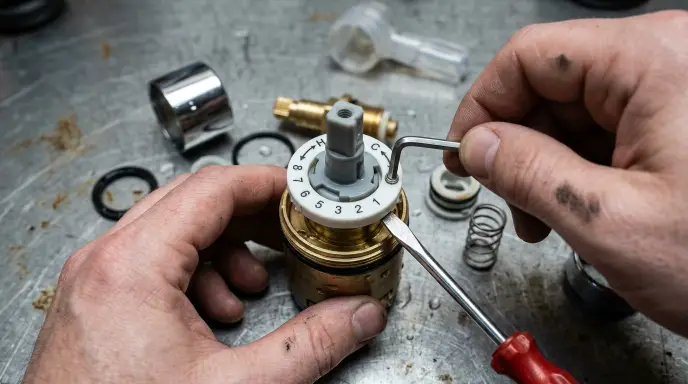
Before buying new hardware, check your existing single-handle shower valve (standard on Moen, Delta, Kohler, and Pfister fixtures):
- Remove the shower handle using an Allen wrench.
- Locate the plastic gear dial (the Rotational Limit Stop or temperature limit stop).
- Pull the disc forward, rotate it clockwise or counterclockwise according to the manufacturer’s markings, and reseat it.
- This physically prevents the handle from turning past a safe threshold, locking out scalding temperatures for free.
Step 3: Install an In-Wall Thermostatic or Pressure-Balance Valve
For a permanent, “set it and forget it” upgrade, replace outdated two-handle stems with a modern pressure-balance or thermostatic mixing valve. This delivers reliable pressure and temperature control throughout the life of the bathroom.
Step 4: Upgrade to ADA-Compliant Lever Handles
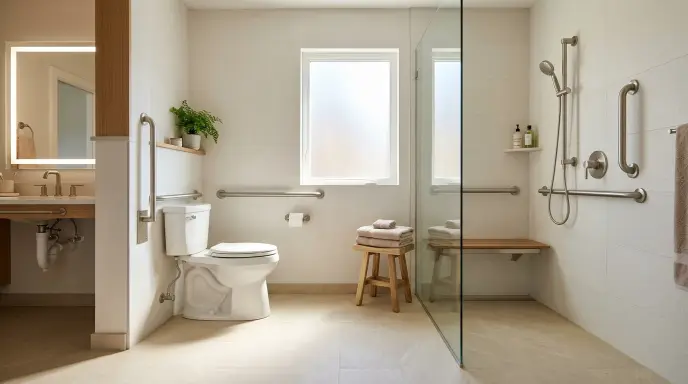
Replace circular turning knobs with single-handle lever faucets. Lever handles allow quick, one-touch shutoff for individuals with arthritis, tremors, or limited grip strength. Pairing single-handle lever faucets with proper walk-in shower grab bar placement ensures bathers can maintain balance with one hand while effortlessly adjusting the water with the other.
Step 5: Add a Retrofit Adapter or Digital LED Showerhead
- Screw-on adapters: Thread onto the shower arm to mechanically throttle flow if water exceeds 114°F.
- Digital LED showerheads: Provide real-time numeric readouts and color-coded visual alerts (blue for cold, green for safe, flashing red for hot), allowing seniors to confirm temperature before stepping into the stall.
DIY vs. Hiring a Plumber: Cost & Safety Considerations
What You Can Do Yourself (DIY)
- Adjusting rotational limit stops: Free (requires only an Allen wrench and screwdriver).
- Retrofit anti-scald adapters: $20–$45 (installs in 5–10 minutes using adjustable pliers and PTFE thread tape).
- Digital LED showerheads: $30–$75 (direct screw-on replacement).
When to Hire a Licensed Plumber
- In-wall TMV or Pressure-Balance valve replacement: $250–$650 (parts and labor). Essential when accessing wall cavities, adapting rough-in plumbing, or soldering copper pipe.
- Cartridge replacements in older rough-in valves: $150–$300.
Budget Strategy: Begin by adjusting the rotational limit stop on your current valve (free) or installing a screw-on adapter (under $40) for immediate protection today. Plan an in-wall TMV upgrade when scheduling broader bathroom renovations.
Frequently Asked Questions
What is the safest shower temperature for seniors?
The safest water temperature for seniors is 120°F (49°C) or lower. At 120°F, skin exposure takes nearly five minutes to cause a third-degree burn, compared to just five seconds at 140°F (60°C).
Can I install an anti-scald valve without tearing down the wall?
Yes. Retrofit anti-scald showerhead adapters screw directly onto the existing shower arm outside the wall. They require no pipe cutting and provide instant thermal shut-off protection without wall access.
Do anti-scald shower heads actually work?
Yes. Quality anti-scald adapters use thermal shut-off valves (TSVs) with wax motors or bimetallic memory discs that reduce water flow to a trickle if temperatures exceed safe thresholds (usually 114°F to 117°F).
How long do anti-scald shower cartridges last?
Most shower valve cartridges last between 8 and 10 years. In areas with hard water, mineral scaling can reduce this lifespan to 5 years. Replace the cartridge if you notice inconsistent temperatures or a stiff handle.
Final Takeaway
Whether you calibrate your valve’s rotational limit stop, install a $20 retrofit adapter, or fit an in-wall thermostatic mixing valve alongside reliable bathroom fall alert systems, these targeted upgrades protect older adults from debilitating burns and traumatic falls. Start with the water heater setting today — it costs nothing and takes five minutes.



11 Comments