
Will Medicare Cover Senior Bathroom Modifications? The Real Coverage Rules (Plus Grants to Pay For It)
Quick Answer: If you’re asking, does Medicare pay for bathroom modifications? the short answer is no under Original Medicare. Original Medicare (Part A & B) does not pay for permanent bathroom modifications such as walk-in tubs, roll-in showers, or grab bar installations because CMS classifies them as home improvements, not medical care. However, seniors can secure up to 100% coverage through Medicare Advantage (Part C) SSBCI plans, state Medicaid HCBS waivers, and government grants like VA HISA ($6,800) or USDA Section 504 ($10,000).
Table of Contents
Does Medicare Pay for Bathroom Modifications? (Part A & Part B Rules)
No. Original Medicare strictly excludes permanent bathroom adaptations from coverage, treating them as residential construction upgrades rather than direct medical procedures—even if a senior has a documented history of falls.
When building a complete aging-in-place bathroom guide, the first critical step in planning your budget is understanding where Medicare draws the line between personal care equipment and structural renovations. Since Medicare generally classifies structural remodeling as home improvements rather than medical equipment, explore our breakdown of low-cost DIY bathroom safety fixes that cost under $1,000 out of pocket.
The Hard Truth: Why Medicare Says No
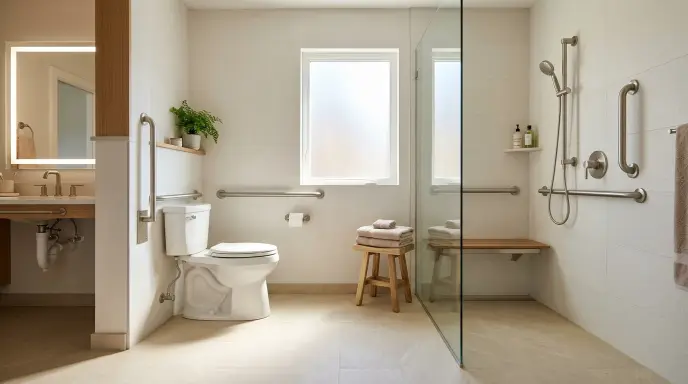
Medicare’s statutory rules under the Centers for Medicare & Medicaid Services (CMS) are structured to treat acute illness and injury, not prevent accidents through home renovations. Because a walk-in tub, a widened bathroom entryway, or a barrier-free shower stall permanently alters real estate and adds equity to your house, Medicare treats it identically to remodeling a kitchen counter. As a result, these structural projects fall outside the definition of “medically necessary” care under Part A or Part B.
The DME Exception (Durable Medical Equipment)
Medicare Part B provides one narrow, specific exception: Durable Medical Equipment (DME). If a licensed physician writes an official prescription detailing medical necessity, Part B covers 80% of the Medicare-approved cost (after your annual Part B deductible) for select non-permanent, portable equipment:
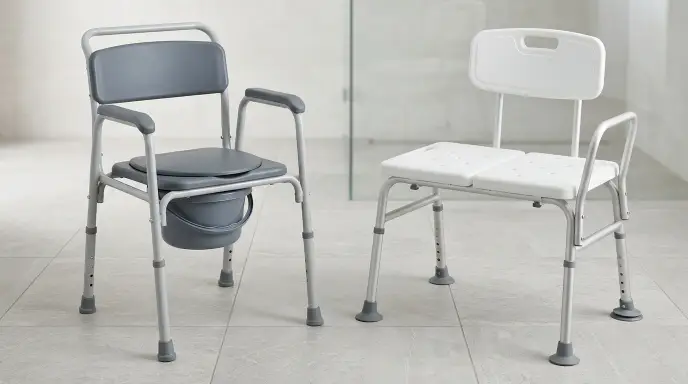
- Bedside commode chairs
- Non-installed transfer benches (explore our guide on choosing a shower chair vs transfer bench for your bathtub)
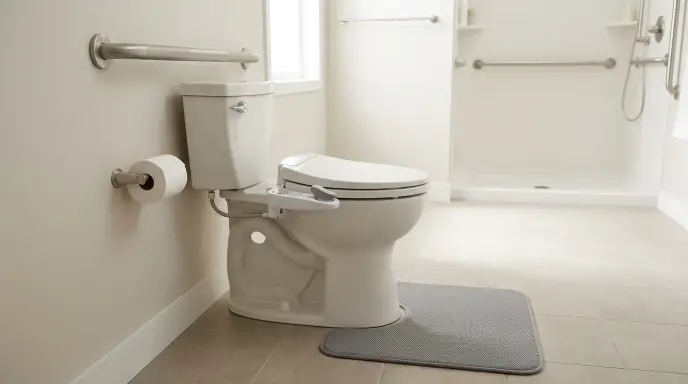
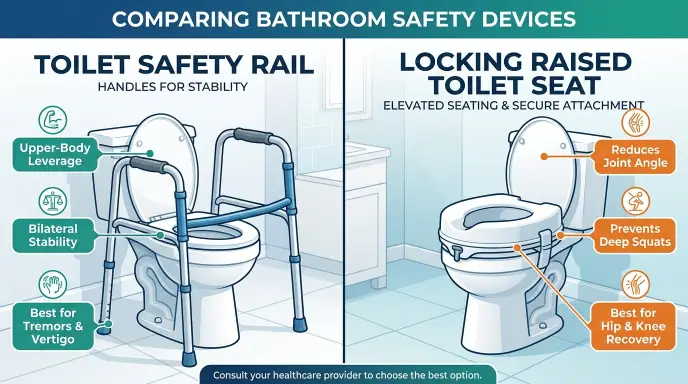
- Specialized elevated toilet seats (see how they compare in toilet safety rails vs raised toilet seats)
- Free-standing safety rails and portable stability assists
The Rule of Thumb: If an item is bolted, caulked, or permanently anchored to your walls or subfloor, CMS classifies it as a structural alteration—resulting in an automatic claim denial.
What Is Explicitly Denied by Original Medicare
Original Medicare will not cover or reimburse upfront for:
- Walk-in bathtubs (if considering one, evaluate walk-in tub vs walk-in shower for seniors)
- Roll-in or barrier-free shower stalls (see design tradeoffs in curbless vs low curb showers for seniors)
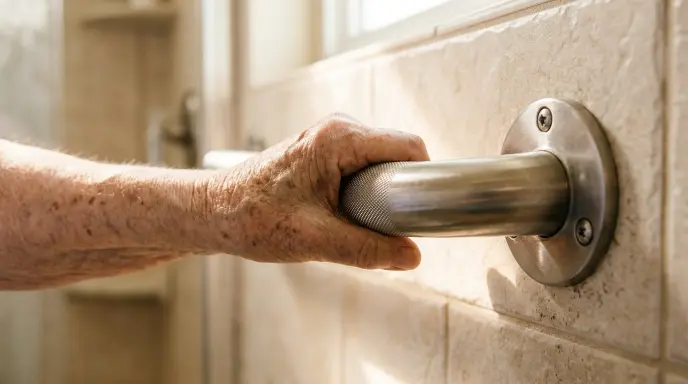
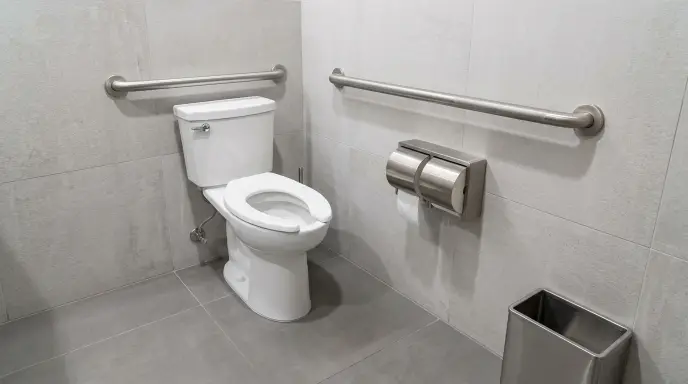
- Permanently anchored wall grab bars (proper placement detailed in our grab bar placement guide for seniors)
- Widened bathroom doors and accessible frames (covered in bathroom door emergency access for seniors)
- Slip-resistant flooring overhauls (learn about the safest bathroom flooring for seniors)
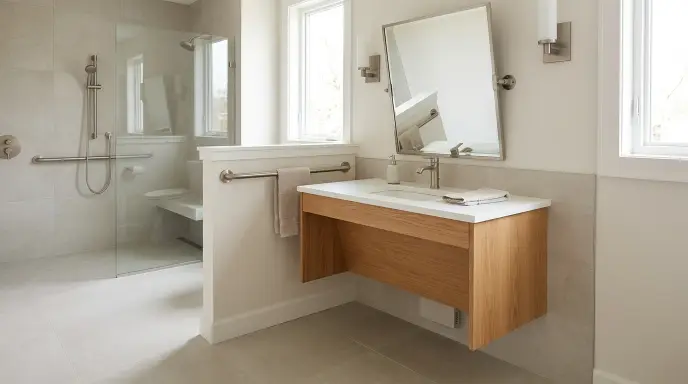
- Accessible plumbing or vanity height modifications
Even if your physician supplies a letter stating “severe fall risk,” these structural modifications remain excluded under standard CMS guidelines.
The Medicare Advantage (Part C) Loophole: How to Get Up to 100% Coverage
Unlike traditional fee-for-service Medicare, private Medicare Advantage (Part C) plans have greater flexibility to pay for environmental home adaptations through CMS supplemental benefit rules.
Special Supplemental Benefits for the Chronically Ill (SSBCI)
Under CMS modernization rules, Medicare Advantage insurers can offer non-primarily health-related benefits to policyholders diagnosed with qualifying chronic conditions (such as severe osteoarthritis, congestive heart failure, Parkinson’s, diabetes complications, or permanent mobility limitations).
Under qualifying SSBCI provisions, approved plans can fund:
- Wall-mounted grab bar installations across transition zones
- Walk-in shower or accessible tub conversions
- Anti-slip floor surface treatments to reduce fall hazards
- In-home fall-risk evaluations by licensed occupational therapists
Note: Allowances vary by carrier and zip code. Some policies provide an annual safety allowance of $500 to $1,500, whereas specialized chronic-care plans may fund professional installations in full.
How to Claim: The 4-Step Process
- Schedule a Clinical Evaluation: Meet with your primary care provider to document functional mobility restrictions and fall risks.
- Obtain a Letter of Medical Necessity (LMN): Ensure your physician lists precise ICD-10 diagnostic codes and explains why specific bathroom safety retrofits are required to prevent institutionalization.
- Submit to Your Plan Coordinator: Present the documentation to your Medicare Advantage supplemental benefits case manager.
- Coordinate with Network Contractors: Many Advantage insurers require you to use their approved, licensed vendor networks to ensure work meets ADA and local building codes.
Quick Breakdown: What Medicare Covers vs. Denies
| Bathroom Modification Item | Original Medicare (Part A/B) | Medicare Advantage (Part C) | Doctor’s Prescription Required? |
|---|---|---|---|
| Walk-in Tub | Denied (0%) | Possible (SSBCI Plans) | Yes |
| Roll-in Barrier-Free Shower | Denied (0%) | Possible (SSBCI Plans) | Yes |
| Wall-Mounted Grab Bars | Denied (0%) | Frequently Covered | Yes |
| Bedside Commode Chair | Covered (80% via DME) | Covered (up to 100%) | Yes |
| Transfer Bench / Shower Seat | Covered (80% via DME) | Covered | Yes |
| Raised Toilet Seat | Rarely Covered | Frequently Covered | Yes |
| Non-Slip Flooring Installation | Denied (0%) | Possible (SSBCI Plans) | Yes |
Top 5 Free Grants & Alternative Funding for Senior Bath Remodels
If your Medicare plan will not pay for structural retrofits, you don’t have to bear the cost alone. Multiple federal, state, and charitable programs step in to fund essential senior bathroom safety upgrades.
1. Medicaid HCBS Waivers (Home and Community-Based Services)
Designed specifically to prevent premature nursing home placement, Medicaid’s Home and Community-Based Services (HCBS) waivers provide direct funding for environmental accessibility adaptations. Depending on your state’s specific waiver guidelines, Medicaid can cover curbless showers, widened entryways, and ceiling track lifts. Contact your local state Medicaid agency to check eligibility and current waiting list status.
2. VA Benefits (For Military Veterans)
- HISA Grant (Home Improvements and Structural Alterations): Provides lifetime allocations up to $6,800 for veterans with service-connected disabilities (or up to $2,000 for non-service-connected conditions) to fund accessible roll-in showers, walk-in tub retrofits, and permanent grab bars.
- SAH & SHA Grants: The Specially Adapted Housing (SAH) and Special Home Adaptation (SHA) grants provide substantial funding for veterans with severe, permanent service-connected mobility impairments needing comprehensive bathroom remodels.
3. USDA Section 504 Home Repair Program
Low-income rural homeowners aged 62 or older can tap into the USDA Single Family Housing Repair program:
- Grants up to $10,000: Need-based grants that do not require repayment if you remain in the property for at least 3 years.
- Loans up to $40,000: Ultra-low interest loans (fixed at 1%) amortized over 20 years to pay for extensive accessibility remodels.
4. Area Agencies on Aging (AAA)
Established under the federal Older Americans Act, local Area Agencies on Aging direct community funds to seniors needing critical home modifications. Dial the national Eldercare Locator at 1-800-677-1116 to reach your regional office and request an intake interview for emergency home safety funding.
5. Non-Profit Aging-in-Place Initiatives
- Rebuilding Together: Coordinates skilled volunteer labor and licensed tradespeople to install grab bars, non-slip flooring, and accessible fixtures for low-income seniors at no cost.
- Habitat for Humanity (Aging in Place): Offers subsidized critical home repair and accessibility retrofits tailored for aging homeowners.
- Local Community Foundations: Local Lions Club or Rotary chapters frequently supply and install basic safety hardware for older adults in their communities.
Step-by-Step: How to Apply for Financial Help for Bathroom Safety
- Get an Occupational Therapy or Fall Risk Assessment: Obtain formal clinical notes documenting your physical limitations. A documented clinical trail is the universal prerequisite for Medicare Advantage, Medicaid, and VA approvals.
- Contact Your Medicare Advantage Coordinator: Inquire explicitly: “Does my current benefit package include SSBCI environmental safety or home modification allowances?”
- Dual-File with Public Programs: You can legally utilize a VA HISA grant or Medicaid waiver alongside private insurance coverage, provided you do not submit duplicate claims for the same individual invoice.
- Audit Local AAA Allocations: Connect with your municipal aging agency to bridge remaining out-of-pocket balances through local community grants.
- Retain Itemized Contractor Invoices: Maintain clear, itemized records from licensed contractors to document qualified medical modifications for tax time.
Frequently Asked Questions
Will Medicare pay for a walk-in tub if a doctor prescribes it?
No. Even with an official prescription from your physician, Original Medicare classifies walk-in tubs as residential upgrades rather than medical necessities. To offset the cost, verify whether your Medicare Advantage policy features SSBCI home adaptation benefits, or check eligibility for a VA HISA grant (up to $6,800) if you served in the military.
How can a low-income senior get grab bars installed for free?
Low-income seniors can obtain free grab bar installations by contacting their local Area Agency on Aging (via the Eldercare Locator at 1-800-677-1116), reaching out to non-profit groups like Rebuilding Together, or applying for home modification allowances through state Medicaid HCBS waivers.
Are bathroom modifications tax-deductible as medical expenses?
Yes. Under IRS Publication 502 (Internal Revenue Code Section 213), home improvements constructed primarily for medical safety—including grab bars, wheelchair-accessible roll-in showers, and lowered vanities—qualify as deductible medical expenses. You can deduct the amount of the expense that exceeds any corresponding increase in your home’s fair market value, provided your overall qualified medical expenses exceed 7.5% of your Adjusted Gross Income (AGI).


8 Comments