
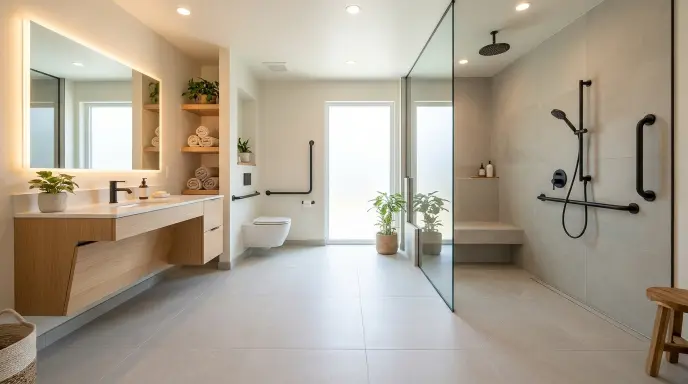
Senior Bath Remodel Cost: Budget Fixes vs. Full Renovation
When building out an aging-in-place bathroom strategy, calculating the true senior bath remodel cost is critical before tearing out walls or hiring contractors. On average, residential accessibility upgrades fall into two main paths: budget DIY safety fixes ($150 to $1,200) or a full accessible bathroom renovation ($8,500 to $25,000+).
Whether you need fast zero-demolition hardware to keep an aging loved one secure or a permanent zero-barrier renovation, prioritizing your spend around core senior bathroom safety principles ensures maximum protection without unnecessary contractor markups.
Quick Cost Summary (At a Glance)
- Low-Cost DIY Route: $150 – $1,200 (Takes 1–2 days; ideal for renters, light balance changes, and immediate fall mitigation)
- Mid-Range Hybrid Upgrades: $1,500 – $5,000 (Takes 3–5 days; targeted tub-to-shower conversions, ADA comfort-height toilets)
- Full Aging-in-Place Renovation: $8,500 – $25,000+ (Takes 2–4 weeks; zero-threshold curbless roll-in showers, walk-in bathtubs, expanded doorways)
| Remodel Type | Estimated Cost | Best For | Typical Timeline |
| Budget DIY Fixes | $150 – $1,200 | Minor balance issues, renters, tight immediate budgets | 1–2 Days |
| Mid-Range Hybrid Upgrades | $1,500 – $5,000 | Targeted risk removal (tub conversion, comfort commode) | 3–5 Days |
| Full Accessible Renovation | $8,500 – $25,000+ | Long-term aging-in-place, progressive conditions, wheelchairs | 2–4 Weeks |
Table of Contents
The Hidden Risk: Why Senior Bathrooms Need Immediate Attention
According to official CDC Fall Prevention Data, more than 80% of adult fall injuries at home happen inside the bathroom. Over 230,000 older adults aged 65 and older visit emergency rooms every year due to bathroom slip-and-fall incidents.
The 3 Most Dangerous Zones in a Senior Bathroom:
- Tub and Shower Entry Ledges: Stepping over a 14-to-18-inch bathtub wall onto a slick, wet basin presents the single highest risk for severe fractures.
- Toilet Transfers: Sitting down and standing back up from standard low porcelain places severe strain on knees and hips, provoking balance failure.
- Wet, Slick Floor Surfaces: Glossy ceramic and vinyl flooring turn slick under slight moisture, creating high slip risks without specialized traction.
Option 1: Low-Cost DIY Safety Fixes (Under $1,000)
If tens of thousands of dollars in construction are out of reach—or if you rent—these standalone hardware upgrades address high-hazard areas immediately without demolition.
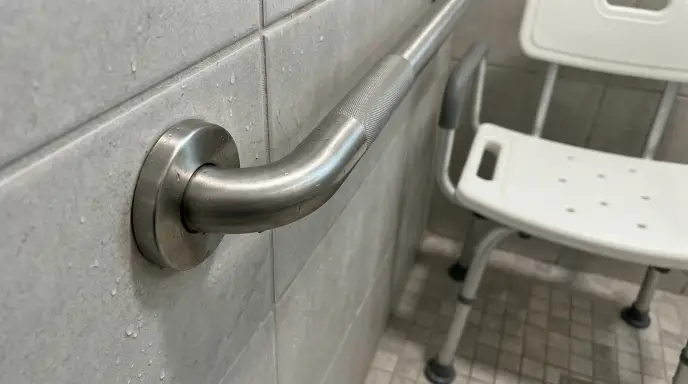
Top-Rated DIY Bathroom Safety Gear (Amazon Quick Picks)
| Safety Zone | Recommended Equipment | Key Spec / Standard | View Product |
| Wall Support | Moen Home Care Textured Stainless Grab Bar | ADA-Compliant, 500 lb capacity | Check Price on Amazon for Moen ADA Grab Bar |
| Toilet Elevation | Carex Raised Toilet Seat with Safety Handles | +3.5-inch rise, tool-free lock | Check Price on Amazon for Carex Toilet Riser |
| Bathing Stability | Drive Medical Heavy-Duty Shower Stool | 400 lb capacity, non-slip feet | Check Price on Amazon for Drive Medical Shower Chair |
| Rinsing Reach | Waterpik High-Flow Handheld Shower Wand | Extra-long hose, one-touch pause | Check Price on Amazon for Waterpik Handheld Wand |
Critical Grab Bars: Placement & Weight Capacity
Why Suction-Cup Bars Fail: Suction-cup handles create a false sense of security. Temperature fluctuations and grout lines cause suction seals to give out without warning under load.
What to Buy Instead:
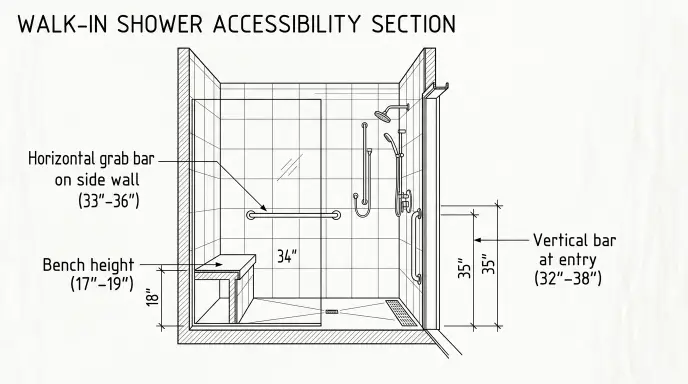
- Anchored, stud-mounted, or structural hollow-wall stainless steel bars
- ADA-compliant textured, knurled non-slip grip finishes
- Minimum 250 to 500 lbs load capacity
- Rust-proof stainless steel or brushed nickel
Pro Tip: Correct positioning is everything. Review our dedicated grab bar placement guide for seniors before drilling to ensure anchors are aligned with natural body leverage points.
👉 Check Price on Amazon for Moen ADA Grab Bar
Anti-Slip Flooring & Mat Solutions
Traditional fabric bath rugs trap water and slide out from underfoot.
- Replace loose bath rugs with vetted, non-skid options designed specifically as safe bathroom rugs for seniors.
- Apply clear, slip-resistant coatings directly to fiberglass tub basins.
- For long-term slip prevention across the room, review the safest bathroom flooring for seniors to choose non-porous, high-traction finishes.
👉 Check Price on Amazon for Textured Anti-Slip Bath Mats & Tub Coatings
Raised Toilet Seats & Safety Frames
Standard builder-grade toilets sit just 14 to 15 inches from the floor, requiring deep joint flexion. ADA standards require 17 to 19 inches of elevation.
- Clamp-on seat risers add 3.5 to 5 inches of elevation in minutes.
- Built-in arm supports allow seniors to push off with their arms rather than straining their knees.
- If deciding between modular frames or riser caps, weigh the pros and cons in our comparison of toilet safety rails vs. raised toilet seats.
👉 Check Price on Amazon for Carex Toilet Riser with Safety Handles
Shower Chairs & Handheld Shower Heads
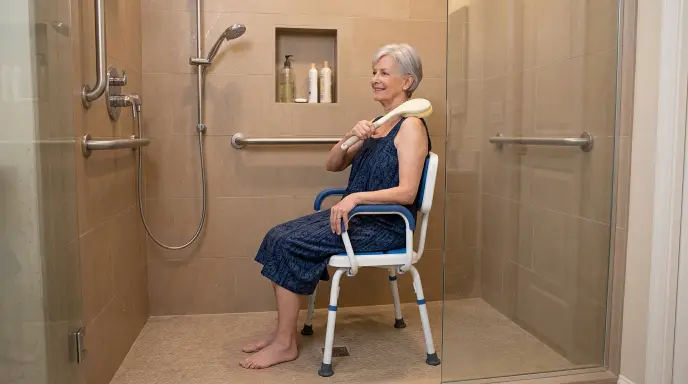
Bathing while seated drastically lowers slip risk and fatigue.
- Heavy-duty blow-molded chairs support 300 to 400 lbs with rubber suction feet.
- Combine your chair with a dedicated setup: check out our guide on handheld shower head setups for seniors to ensure your hose length (72–84 inches) reaches comfortably without pulling.
- For hard-to-navigate tub walls, compare options in our guide on shower chairs vs. transfer benches.
👉 Check Price on Amazon for Drive Medical Shower Chair & Wand Combo
Cost-Saving Safety Bundle: Combining these four hardware items typically costs $120 to $175 total—less than 2% of a contractor’s gut renovation fee.
Option 2: Full Accessible Bathroom Renovation ($8,500 – $25,000+)
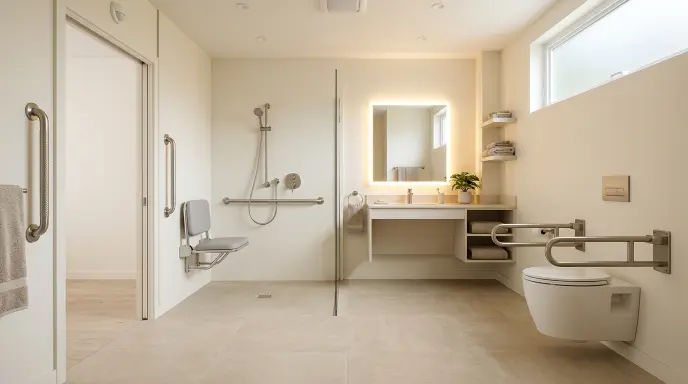
When progressive conditions, continuous wheelchair usage, or multi-generational planning dictate long-term durability, a code-compliant overhaul is the right path.
Walk-In Tubs vs. Curbless Roll-In Showers
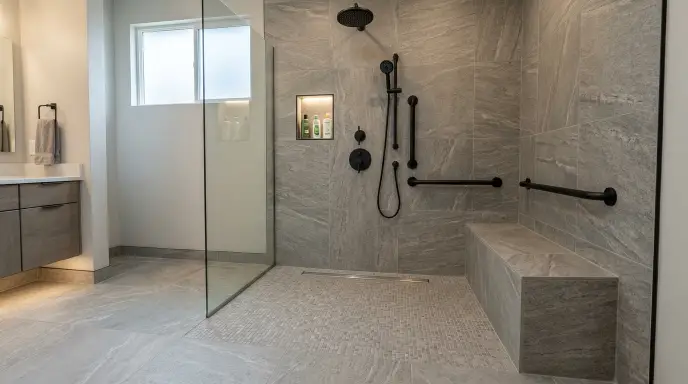
| Feature | Walk-In Bathtub | Curbless Roll-In Shower |
| Installed Cost Range | $4,500 – $12,000 | $7,500 – $16,000 |
| Wheelchair Transfer | Restricted entry door | Level, zero-threshold drive-in |
| Wait Time / Operation | Must sit inside while tub fills & drains | Instant hot water, zero wait |
| Resale Impact | Mixed (niche prospective buyers) | Broad market appeal, high contemporary value |
Curbless roll-in showers remain the preferred modern standard. To see how each handles transfers and day-to-day use, read our detailed comparison of walk-in tubs vs. walk-in showers. If you decide on a shower, learn the critical engineering differences in our guide to curbless vs. low-curb showers.
Labor & Structural Modification Charges
Expect rough plumbing and structural framing to make up 40% to 60% of your total invoice:
- Subfloor Recessing & Waterproofing: $1,800 – $3,500 (Dropping joists to create level, curbless drainage)
- Plumbing Line Relocations: $1,200 – $2,800 (Shifting rough-in drains and mixing valves)
- In-Wall Blocking & Backing: $400 – $800 (Installing 2×6 solid wood framing between studs to support heavy grab bars)
- Licensed Trade Labor: $3,500 – $7,500 (Master plumbers, certified tile setters, and electricians)
Doorways & Floating Vanities
- 36-Inch Door Openings: Standard 28-to-32-inch doors are too narrow for standard walkers and wheelchairs. Expanding door frames or installing pocket systems costs $700 – $1,800. For emergency protocols, review our guide on bathroom door emergency access for seniors.
- Roll-Under Vanities: Sinks need 27 inches of vertical knee clearance and insulated plumbing traps to guard against burn injuries, as outlined in our guide to bathroom sink and vanity safety for seniors.
Side-by-Side: DIY Fixes vs. Full Renovation
| Renovation Point | Budget DIY Fix (Amazon Equipment) | Full Renovation Overhaul |
| Bathing Access | Shower stool + long wand ($85) | Zero-entry curbless tile shower ($9,500) |
| Toilet Assistance | Bolt-on riser with side rails ($55) | Comfort-height ADA elongated toilet ($650 installed) |
| Traction Control | Anti-slip epoxy + suction mat ($45) | Textured unglazed porcelain floor tile ($2,800) |
| Weight-Bearing Anchor | Stud-screwed grab rails ($65) | In-wall structural wood blocking ($1,100) |
| Total Typical Cost | ~$250 – $500 | ~$14,000 – $22,000 |
Industry Insights: What Most Remodelers Don’t Share
1. The Renter Workaround
If lease agreements forbid tile drilling or plumbing changes:
- Install tension-mounted floor-to-ceiling security poles next to the tub; these use pressure pads without damaging drywall or tile.
- Avoid tub entry hazards completely by using the techniques in our guide to navigating high-step bathtubs safely without remodeling.
2. The Medicare Insurance Truth
Standard Medicare Part A and Part B do not pay for walk-in tubs, roll-in showers, or general remodeling. They are classified as home modifications rather than medical equipment.
- Exception: Specific standalone hardware (shower chairs, commode transfer systems) can qualify for partial reimbursement if prescribed as Durable Medical Equipment (DME). Get the full details in our breakdown: Does Medicare pay for bathroom modifications?
3. The Low-Cost Hybrid Alternative ($2,500 – $4,500)
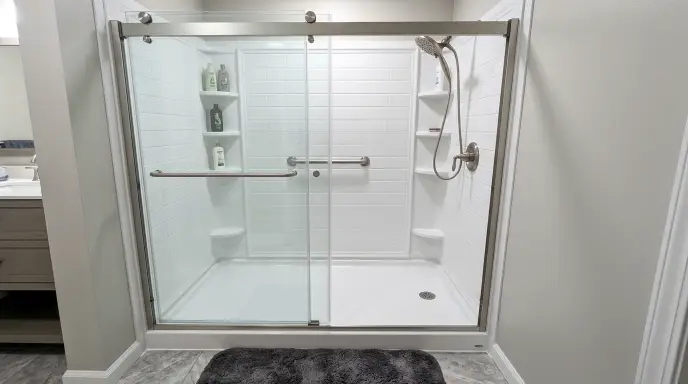
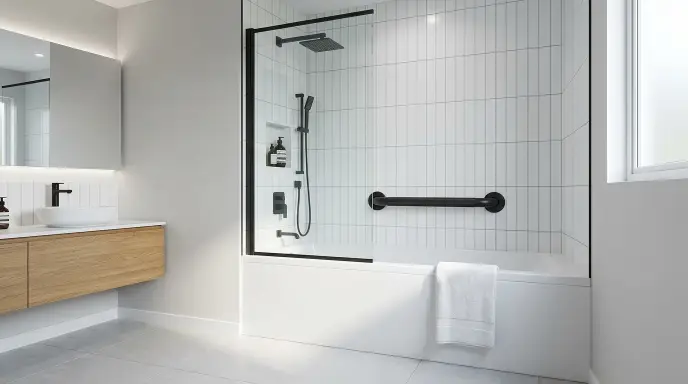
Homeowners do not have to choose between a $300 quick patch and a $20,000 gut remodel. You can have a contractor remove the old tub basin, leave the rough plumbing where it is, and drop in a pre-molded low-threshold fiberglass pan with acrylic wall surrounds. This delivers a dependable safety setup in under two days at a fraction of the cost.
Decision Checklist: Which Option Fits You?
- Does the senior rely on a walker, wheelchair, or caregiver assistance to move?
- Yes: Prioritize a full curbless conversion or a low-threshold hybrid pan.
- Are you currently renting your apartment or home?
- Yes: Stick to non-invasive DIY safety gear (risers, shower chairs, tension poles).
- Are you planning on aging in place in this house for the next 7 to 10 years?
- Yes: A complete accessible remodel provides higher long-term safety and boosts home resale value.
- Is your total available budget below $1,500?
- Yes: Start with the DIY safety starter bundle today, and upgrade the hardware incrementally.
For a printable, step-by-step audit of your entire space, review our complete senior bathroom safety checklist.
Frequently Asked Questions
What is the cheapest way to make a bathroom safe for seniors?
The cheapest way is installing three essential DIY items: a stud-mounted stainless steel grab bar ($60), a non-slip bath mat with anti-slip floor coating ($35), and a raised toilet seat with support arms ($55). This secures the three most dangerous slip zones for under $160 without contractor labor.
Does Medicare cover walk-in tubs or bathroom remodels?
No. Medicare does not cover walk-in tubs, zero-threshold showers, or remodeling labor because they are categorized as residential structural modifications. However, specific standalone DME equipment like bedside commodes or transfer seats may receive partial coverage under Medicare Part B with a physician’s prescription.
Are suction-cup grab bars safe for seniors?
No. Suction-cup grab bars are unsafe for seniors with serious balance or mobility impairments. They lose their seal unexpectedly on dirty or textured tiles and release under full body weight. Only mechanical wall-stud-anchored bars rated for 250 to 500 lbs should be trusted for fall prevention.
How much value does an accessible bathroom add to a home?
A modern accessible bathroom remodel typically recovers 60% to 70% of its initial cost at resale. Clean, curbless walk-in showers with stylish brushed metal grab bars appeal strongly to aging buyers as well as modern design shoppers looking for spacious open floor plans.
Disclaimer: This guide is provided for educational and home planning purposes only. Consult with a licensed general contractor and an occupational therapist to tailor safety modifications to specific medical and structural needs.



5 Comments