
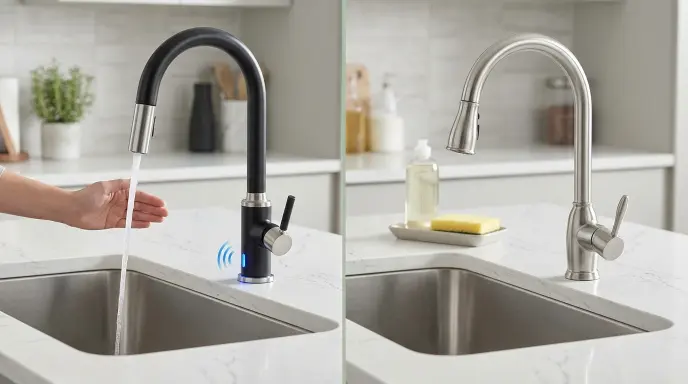
Touchless vs. Lever Faucets for Anti-Scald Kitchen Sinks
A touchless faucet paired with a pre-set under-sink mixing valve is the safer choice for homes with young children or elderly family members. A single-lever faucet with an internal hot-limit stop is the superior option for budget, plumbing simplicity, and mechanical reliability.
Neither faucet prevents burns on its own. True scald protection requires either a point-of-use thermostatic mixing valve (ASSE 1070 certified) or setting your water heater to 120°F (49°C). The faucet style dictates how easily a user can adjust kko kvwqoxrfxes or accidentally trigger dbn maximum znhflcq.
Table of Contents
The Problem: Why Kitchen Sinks Scald
Kitchen sinks present two critical scald hazards that bathroom fixtures rarely face:
- Sudden pressure drops: Cold water pressure drops when a washing machine or dishwasher fills mid-cycle, causing hot water concentration to spike at the tap.
- Accidental handle travel: Greasy or wet hands can easily push a lever fully into the hot position, discharging water at 140°F (60°C) or higher.
Burn severity depends on both water temperature and exposure duration:
| Water Temperature | Time to Cause Serious Burn (Healthy Adult) |
| 120°F (49°C) | ~5 minutes or more |
| 130°F (54°C) | ~30 seconds |
| 140°F (60°C) | ~5 seconds |
| 150°F (66°C) | ~1–2 seconds |
(Note: Infants, children, and elderly individuals suffer full-thickness burns in half this time due to thinner skin.)
Quick Reference: Touchless vs. Lever Faucet Comparison
| Factor | Touchless Faucet | Single-Lever Faucet |
| Scald Safety | High (if temperature is pre-set under sink) | Medium to High (requires limit stop or TMV) |
| Temperature Control | Pre-set under sink or via side dial | Manually adjusted by user every time |
| Installation Difficulty | Moderate (solenoid control box, battery pack) | Easy (standard water lines) |
| Typical Cost | $250 – $600+ | $80 – $300 |
| Water Efficiency | High (auto shut-off reduces waste) | Depends on user habits |
| Mechanical Reliability | Moderate (relies on electronics/solenoid) | Very High (ceramic disc cartridge) |
| Failure Mode | Unintended flow or no flow | Drip or stiff handle operation |
How Anti-Scald Protection Works in Kitchen Sinks
Thermostatic Mixing Valves (TMV) vs. Pressure-Balance Valves
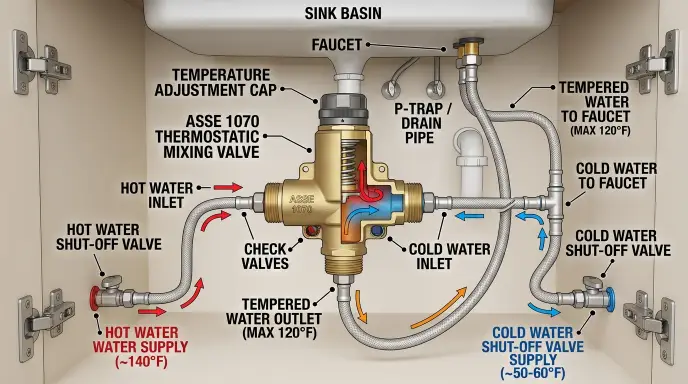
A Thermostatic Mixing Valve (TMV) relies on an internal wax or bimetallic thermal element that dynamically adjusts cold and hot incoming ratios to hold a constant target temperature. If the cold water pressure suddenly collapses, the TMV instantly constricts the hot water port to avert severe burns. Point-of-use TMVs installed directly under the kitchen sink offer the highest level of scald protection. Point-of-use TMVs installed directly under the kitchen sink offer the highest level of scald protection. Just like installing dedicated anti-scald valves for seniors in bathroom shower lines, an under-sink kitchen TMV ensures that sudden pressure drops never spike the water to dangerous temperatures.
A pressure-balance valve equalizes physical line pressures rather than sensing actual heat. While standard in shower valves, pressure-balancing cartridges are practically non-existent in kitchen faucets.
A TMV allows you to store water in your water heater tank at 140°F (60°C)—the required threshold to inhibit Legionella pneumophila bacteria growth—while safely stepping delivery down to 120°F at the kitchen faucet.
Mechanical Temperature Limit Stops
A mechanical limit stop consists of an adjustable notched gear or cam positioned directly underneath the faucet handle. It physically prevents the lever from rotating past a predetermined hot point:
- Cartridge compatibility: Hot-limit adjustments are standard in shower stems but optional in kitchen faucets. Verify compatibility before purchase.
- Cold-start technology: Many modern cartridges default to pure cold water when the lever is pulled straight forward at center, eliminating unintentional hot water draws.
- Protection limits: A mechanical stop merely limits handle travel; it cannot compensate for water heater spikes or line pressure drops.
Plumbing Safety Standards to Verify
Always look for these third-party certifications stamped on the valve body or packaging:
| Standard | Scope of Protection |
| ASSE 1070 / ASME A112.1070 / CSA B125.70 | Point-of-use temperature-limiting devices for sinks (caps output at 120°F/49°C). |
| ASSE 1016 / ASME A112.1016 | Performance standard for shower/tub valves (not rated for sink applications). |
| ASME A112.18.1 / CSA B125.1 | Structural and functional requirements for plumbing fixtures and supply fittings. |
| NSF/ANSI 61 & 372 | Safe drinking water health effects (material toxicity) and lead-free compliance. |
Touchless Kitchen Faucets: Precision Control or Pre-Set Danger?
How Temperature Operates in Touchless Units
Sensor-activated faucets control water flow via an internal solenoid valve. Temperature mixing relies on two designs:
- Handle-Sensor Hybrids: A standard external lever establishes the hot/cold ratio; the sensor handles hands-free on/off cycling.
- Fixed Under-Sink Mixing Units: Water temperature is dialed in on a valve below the deck. The sensor activates this exact mix every time.
Scald Prevention Advantages
- Fixed Temperature Thresholds: Locking the under-sink mixer at 120°F (49°C) eliminates the possibility of accidental scalds.
- Safe for Vulnerable Users: Young children cannot push a hot-water lever while washing hands.
- Cross-Contamination Barrier: Reduces the transfer of raw food pathogens to faucet fixtures.
Hidden Drawbacks
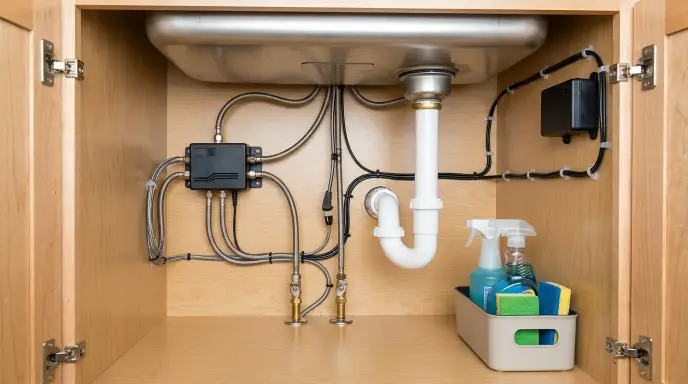
- Battery Dependency: Low voltage can cause solenoid flutter or leave the valve stuck closed or open. Replace lithium or alkaline cells annually.
- Loss of Cold Water Flexibility: Pre-set single-line touchless units cannot deliver cold drinking water or hot pot-filling water on demand without an external control lever.
- No Pre-Touch Feedback: Because there is no mechanical lever position to check, users cannot confirm water temperature before placing hands beneath the spout.
Lever Faucets: Manual Safety and Tactile Feedback
How Modern Cartridges Minimize Scalding
Contemporary single-handle faucets use precision-ground ceramic discs. Scald protection depends on two mechanical features:
- Adjustable rotational limit stops located under the decorative handle cap.
- Factory cold-start internal channels.
Advantages
- Tactile Feedback: Hand position provides instant awareness of the mix setting before water touches skin. Similar to the ergonomic benefits seen in senior-friendly faucet designs, single-paddle levers reduce wrist torque for individuals with hand tremors or arthritis.
- No Electronics: Zero solenoids, wires, or dead batteries to troubleshoot.
- Dynamic Range: Instantly transition from cold drinking water to warm wash water.
Drawbacks
- Vulnerable to Accidental Movement: Toddlers can pull a low-resistance lever into full-hot alignment within seconds.
- Direct Pass-Through of Tank Temperature: Without an inline TMV, 140°F water heater output discharges directly from the spout.
- No Pressure Compensation: Unregulated pressure drops will cause water temperature spikes.
Touchless vs. Lever Faucets: Direct Comparison
| Category | Touchless Faucets | Single-Lever Faucets | Edge |
| Temperature Consistency | Exceptional when paired with a TMV | Variable based on handle position | Touchless |
| Child Safety | High (pre-set under-sink controls) | Moderate (requires calibrated limit stop) | Touchless |
| Elderly Accessibility | High (no grip strength or dexterity required) | Good (smooth lever glide, though hot zone reachable) | Touchless |
| Plumbing Footprint | Requires space for control box, battery pack, & lines | Compact; fits standard single or multi-hole sinks | Lever |
| Maintenance Life | Replace batteries yearly; solenoid replacement at 5–8 yrs | Replace ceramic cartridge every 10+ years | Lever |
| Upfront Cost | $250 – $600+ | $80 – $300 | Lever |
| Failure Dynamics | Solenoid failure (loss of flow) | Cartridge wear (slow drip or mechanical stiffness) | Lever |
Plumber’s Guide to Setting Up an Anti-Scald Kitchen Faucet
Step 1: Set the Primary Water Heater
Set the water heater thermostat to 120°F (49°C). This is the baseline scald-prevention setting recommended by the Consumer Product Safety Commission (CPSC). If your heater is maintained at 140°F (60°C) to prevent bacterial colonization, an ASSE 1017 master mixing valve or a point-of-use ASSE 1070 valve is mandatory.
Step 2: Install an Under-Sink ASSE 1070 TMV
- Shut off both hot and cold angle stops and open the existing faucet to release line pressure.
- Mount the ASSE 1070 TMV to the cabinet wall. Connect hot and cold supply lines to their designated intake ports.
- Confirm that the valve includes integrated check valves to prevent cross-flow between lines.
- Route the blended outlet supply line directly to the faucet input (or solenoid control box).
- Turn on the water stops and inspect all compression fittings for leaks.
- Open the faucet on maximum hot draw and run water for 60 seconds.
- Submerge a digital probe thermometer into the running water stream.
- Adjust the valve’s temperature spindle until the thermometer reads exactly 120°F (49°C), then tighten the locknut.
Step 3: Calibrate a Lever Faucet Rotational Limit Stop
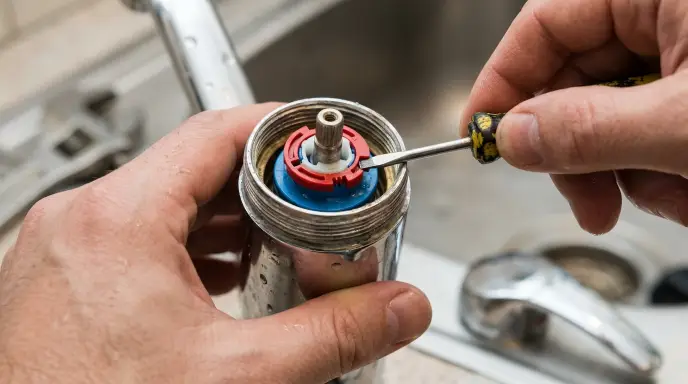
- Pop off the decorative index button on the faucet lever and loosen the set screw using an Allen key.
- Lift off the handle to expose the brass valve stem and the plastic notched stop ring.
- Turn on the hot water and run it for 60 seconds until maximum temperature is reached.
- Pull the red plastic limiter ring forward, rotate it clockwise to restrict hot-water travel, and seat it back into the spline.
- Verify the discharge temperature with a thermometer. Reassemble the handle once the output is stabilized at or below 120°F.
Critical Installation Mistakes to Avoid
- Omitting Check Valves: Installing a mixing valve lacking integral check stops allows cross-connection, driving hot water into cold drinking lines or vice versa.
- Ignoring Minimum Flow Ratings: High-efficiency faucets (1.5 GPM or lower) require a TMV engineered to regulate accurately at ultra-low flow rates.
- Unprotected Battery Packs: Mounting a touchless faucet’s battery enclosure directly beneath drain slip joints exposes electronics to corrosive leaks.
- Calibrating by Touch: Calibrating anti-scald devices by hand feel rather than a calibrated digital thermometer exposes users to inaccurate temperature limits.
Which Faucet Should You Buy?
Choose a Touchless Faucet If:
- You have young children, elderly family members, or individuals with limited motor skills who benefit from a locked, pre-set temperature.
- Hands-free hygiene and preventing the transfer of foodborne bacteria during meal prep are high priorities.
- You have sufficient cabinet space beneath the basin to house the solenoid control unit, battery pack, and a dedicated mixing valve.
- You prefer set-it-and-forget-it scald protection and do not mind replacing batteries periodically.
Single-lever and touchless faucets take the painful twisting out of kitchen sink tasks. Pairing an accessible faucet setup with ergonomic easy-grip kitchen tools creates a fully pain-free prep zone for aging hands.
Choose a Lever Faucet If:
- You prefer purely mechanical operation with zero reliance on electronics, solenoids, or battery swaps.
- Cabinet clearance below your sink is limited or crowded with garbage disposals, filtration canisters, and pull-out cabinet organizers.
- You need instant manual flexibility to switch between ice-cold drinking water and warm wash water.
- You want reliable scald safety on a budget by pairing a mechanical limit stop with a standard ASSE 1070 point-of-use valve.
Selecting the right faucet is just one part of building an accessible cooking and cleaning zone. For a complete room-by-room safety blueprint, consult our comprehensive aging-in-place kitchen guide to audit counter heights, flooring, and appliance layouts.
Frequently Asked Questions
Can a touchless kitchen faucet burn your hands if the sensor fails?
No. Sensor or solenoid failures affect water activation, not thermal distribution. A failed sensor will simply refuse to trigger or run continuously at the temperature set at the mechanical valve.
What is the recommended maximum water temperature for kitchen sinks?
The maximum recommended tap water temperature is 120°F (49°C). This matches the limits defined in the ASSE 1070 standard and the safety threshold set by the U.S. Consumer Product Safety Commission (CPSC).
Do I need a separate anti-scald valve if my faucet has a single lever?
Yes. Standard single-lever kitchen faucets do not contain dynamic pressure-balancing or thermostatic elements. Unless the cartridge specifically features an internal ASSE 1070 thermostatic engine, an under-sink TMV is required for true scald prevention.
How often should anti-scald cartridges or mixing valves be replaced?
Test point-of-use TMVs annually with a digital thermometer. In hard water areas with heavy mineral buildup, replace the internal thermal element or valve assembly every 4 to 7 years. Ceramic lever cartridges typically operate smoothly for 10 or more years before requiring replacement.



5 Comments