
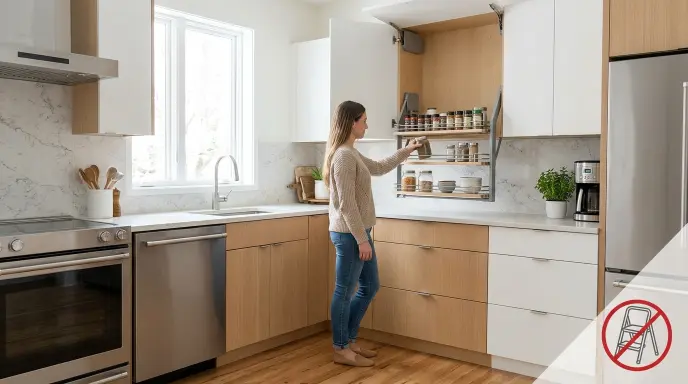
No More Step Stools: Best Pull-Down Cabinet Shelves for Seniors & Aging in Place
Affiliate Disclosure: AgeFolk is reader-supported. When you purchase through links on our site, we may earn an affiliate commission at no extra cost to you. As an Amazon Associate, we earn from qualifying purchases.
Reaching for a high plate or spice jar shouldn’t require balancing on a wobbly step stool or kitchen chair. For older adults, reaching overhead or climbing to access upper cabinets is one of the leading triggers of severe kitchen falls, rotator cuff strain, and lost independence.
Pull-down cabinet shelves solve this safety hazard by using smooth gas-assisted struts or motorized lifts to bring upper storage 10 to 15 inches downward and out toward you. Instead of stepping off the floor or stooping down to crowded base cabinets, your everyday essentials descend right into your safe, mid-body reach zone.
In this guide, we evaluate the best pull-down cabinet shelves for seniors—breaking down actual pull resistance, safe weight limits for aging hands, measuring pitfalls to avoid, and which models provide the smoothest, step-free access for aging in place.
Table of Contents
Quick Verdict & Executive Summary
What is a pull-down cabinet shelf?
A pull-down cabinet shelf is a gas-assisted or motorized shelf system installed inside an upper cabinet. A handle or button lowers the shelf roughly 10 to 15 inches down and out toward you, allowing seniors to reach dishes, spices, and everyday food items without a step stool—drastically reducing kitchen fall risks and eliminating the daily climb.
| Category | Best Pick Type | Reach Drop | Effort Level | Best For |
| Top Pick Overall (Heavy-Duty & Smooth) | Hydraulic gas-assist 2-tier system (e.g., MUOLVSQ 22–24″ Upper Cabinet Unit) | ~10–12″ down, drops to chest level | Low | Most seniors needing step-free reach for spices, dry goods, and everyday dishes |
| Best for Arthritis / Weak Hands | 2-Tier Aluminum Alloy Pull-Down Shelf w/ Clear Front Guards | ~10–14″ drop, drops to comfortable chest level | Very low | Hand pain, weak grip, and low-vision seniors storing glass jars & spice bottles |
| Best Budget-Friendly Option | 3-Tier Pull-Down Spice Rack Organizer | ~8–10″ drop forward and down | Very low | Spices, seasoning jars, pill bottles, and low-budget cabinet accessibility |
| Best Motorized / Accessible Pick | 34″ Motorized Electric Pull-Down Cabinet Lift System | Full descent straight down to countertop level | Zero (Push-button / Remote) | Wheelchair users, severe arthritis, Parkinson’s tremors, and zero-pull accessibility |
The Bottom Line: For most aging-in-place kitchens, a gas-assisted manual unit offers the best balance of cost, durability, and ergonomic relief. If grip strength, severe shoulder pain, or wheelchair accessibility is a concern, an electric motorized unit is well worth the higher investment.
Related reading: Explore our guide to accessible kitchen cabinet systems and our comprehensive kitchen aging-in-place guide.
The Hidden Danger of Step Stools in Aging Kitchens
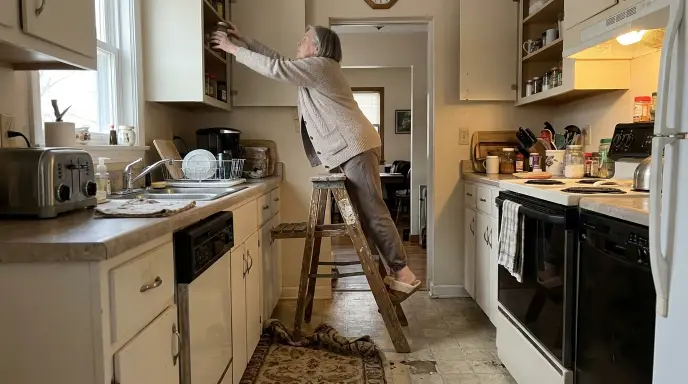
Fall Statistics & Physical Limitations
According to the CDC, more than 1 in 4 adults aged 65 and older fall each year, making falls the leading cause of injury-related death in this demographic. The kitchen remains one of the most hazardous rooms in the house. Climbing onto a chair or a folding step stool to reach high shelves forces an older adult to stand on a narrow, unstable surface while balancing with their arms overhead—often while attempting to lift or pull a heavy item.
Loss of Functional Reach
Upper cabinets quickly become an inaccessible “dead zone” due to several overlapping physical changes:
- Shoulder Conditions: Rotator cuff tears, bursitis, and osteoarthritis make overhead reach extremely painful or mechanically impossible.
- Balance Decline: Inner-ear changes, peripheral neuropathy, medication side effects, or weakened core and leg muscles make any raised or tiptoe position dangerous.
- Vision & Depth Perception Shifts: Diminished contrast sensitivity makes it difficult to clearly identify items tucked in the dark recesses of top shelves, leading to leaning, overstretching, and dangerous tilts.
Standard wall cabinets typically begin 54 inches above the finished floor, with top shelves exceeding 6 feet high—far outside the safe ergonomic reach zone for seniors and completely out of reach for anyone seated in a wheelchair.
Why Moving Everything to Lower Cabinets Isn’t Always the Answer
Relocating everyday items down into base cabinets might seem like an easy workaround, but it creates a different set of hazards:
- Repeated deep bending, stooping, and kneeling puts severe mechanical strain on the lower back, hips, and knees.
- Getting back up from the floor or a deep crouch can trigger dizziness (orthostatic hypotension) or joint lockup.
- Base storage is physically limited and usually already packed with bulky pots, pans, and countertop appliances.
Pull-down shelves bridge this gap by bringing high storage down into the primary mid-body comfort zone (between waist and chest level), eliminating both dangerous climbing and deep crouching.
What Competitors Miss: Gas Struts vs. Senior Grip Strength
Most standard product roundups summarize dimensions and list prices without addressing the actual biomechanical interaction between the shelf mechanism and older hands.
The Pull-Down Counter-Resistance Issue
Gas struts and internal tension springs are factory-calibrated to counterbalance a specific working weight:
- Empty or Lightly Loaded: The gas strut pushes upward with maximum force. A senior pulling down an empty or underloaded shelf may experience unexpectedly stiff resistance, leading to shoulder strain.
- Properly Loaded: The weight of the stored items counteracts the internal piston pressure, allowing the shelf to glide down smoothly with minimal effort.
Actionable Advice: Prioritize units with adjustable tension controls. If a newly installed shelf feels stiff to pull, place 4 to 6 pounds of pantry goods on the tray before evaluating its ease of movement.
Lock-Down Mechanism Safety
Once the shelf reaches its lowest point, the user must be able to release their grip and use both hands freely to handle items. Look for:
- Positive Mechanical Detents: A clear locking position at the bottom rather than relying on weak friction stops.
- Low-Torque Release: A mechanism that does not require a tight pinch grip or awkward wrist twist to release.
- Damped Soft-Close Return: A controlled, hydraulic return that prevents the shelf from snapping violently upward if accidentally released.
Any shelf system requiring one hand to hold it down while the other fishes for a jar is an immediate drop hazard that defeats the purpose of the upgrade.
Weight Rating vs. Safe Lifting Limits
Most heavy-duty manual pull-down units boast weight ratings between 20 and 26 pounds. However, this is a structural capacity limit, not an ergonomic recommendation for an older adult.
- Recommended Working Load for Seniors: 8 to 12 pounds total. Focus on lightweight pantry items, small spice containers, tea, coffee, and lightweight plastic or melamine dishware. Keeping the load well below capacity guarantees a featherlight pull, reduces structural stress on cabinet anchor screws, and ensures total user control.
Top Rated Pull-Down Shelves for Seniors
Our editorial Senior Accessibility Score (out of 10) evaluates physical effort, lockdown stability, grip demands, shelf visibility, and installation complexity. While pull-down shelves solve the overhead reaching issue, pairing them with pull-out cabinet organizers for seniors eliminates painful bending and kneeling at the base cabinets.
Model 1: The Top Pick Overall – Heavy-Duty 2-Tier Gas-Assisted Pull-Down Shelf
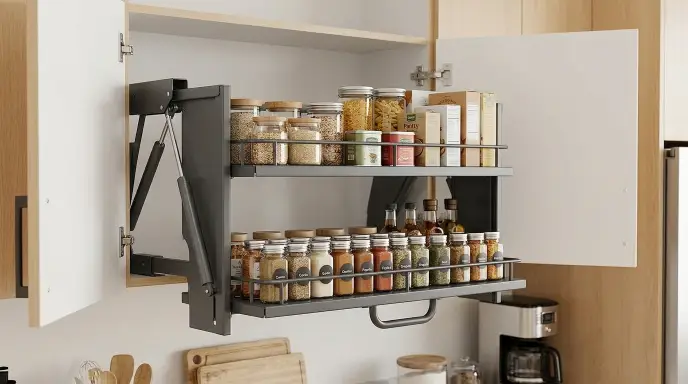
- Mechanism: Dual hydraulic gas-strut dampening system with a padded front pull-down crossbar handle.
- Cabinet Compatibility: Designed for upper wall cabinets with an opening width of 22 to 24 inches (Requires Minimum Interior Depth: 11″, Minimum Interior Height: 22″).
- Weight Rating: Rated up to 66 lbs mechanical load capacity (Recommended senior working load: 8–12 lbs for effortless, smooth pulling).
- Senior Accessibility Score: 9.2/10
Pros:
- Solid base & tall side rails: Flat tray shelves keep small spice jars, sauce bottles, and glass containers upright without tipping or slipping during movement.
- Padded pull-down handle: A soft front grip prevents slipping and significantly reduces hand strain for seniors with mild arthritis or weak grip strength.
- Heavy-duty load capacity: The 66 lb structural rating ensures durable gas pistons that won’t warp or bind under daily use.
- Modern dark gray finish: The scratch-resistant finish provides a clean, premium look inside the cabinet.
Cons:
- Requires an interior clear height of at least 22 inches and an interior depth of at least 11 inches.
- Pulling down the shelf when empty may feel stiff due to counter-resistance; adding 4 to 6 lbs of pantry items ensures a much smoother descent.
Senior Verdict: The best all-around manual pull-down organizer to eliminate the step stool, safely lowering everyday cooking staples directly into a comfortable mid-body reach zone.
👉 Check Current Price on Amazon
Model 2: Best for Arthritis & Weak Hands – 2-Tier Aluminum Alloy Pull-Down Shelf Organizer
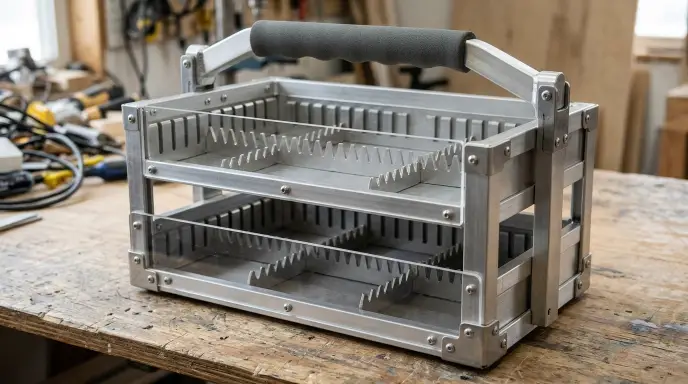
- Mechanism: Dual gas-assist hydraulic dampening arms with a wide, padded ergonomic crossbar handle.
- Construction: Lightweight, rust-resistant aluminum alloy frame with solid shelf trays and clear protective front panels.
- Senior Accessibility Score: 9.1/10
Pros:
- Solid trays with clear guard panels: Unlike open wire grids, the solid base combined with transparent acrylic front panels keeps spice jars, medicine bottles, and small containers from wobbling, tipping, or slipping out during descent.
- Lightweight aluminum build: The aluminum alloy frame reduces the deadweight of the unit itself, ensuring the gas pistons provide smooth, effortless motion without excessive pulling force.
- Ergonomic grip: The wide, foam-padded crossbar allows seniors with stiff, arthritic fingers to pull the unit down using their palms or forearm leverage instead of requiring a tight pinch grip.
- High-value price point: Delivers modern hydraulic dampening and sleek styling at an accessible ~$159.99 cost.
Cons:
- Solid bases collect dust and spice residue more visibly than wire racks, requiring routine wiping.
- Side-mounting brackets require precise cabinet interior width measurements to prevent track friction.
Senior Verdict: The safest, most stable manual drop-down shelf for seniors managing joint pain, tremors, or limited hand dexterity who want secure storage for small glass containers.
👉 Check Current Price on Amazon
Model 3: Best Budget-Friendly Pick – 3-Tier Pull-Down Spice Rack Organizer
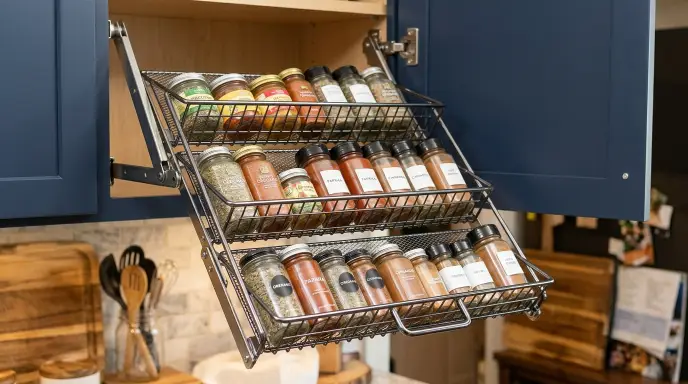
- Mechanism: Smooth lever-action drop-down arms with tiered wire baskets for stair-step visibility.
- Design & Compatibility: 3-tier wire design for upper wall cabinets, dedicated to lightweight dry goods and spices.
- Senior Accessibility Score: 8.8/10
Pros:
- Exceptional affordability: Delivers safe, step-stool-free reach at an entry-level price point of ~$33.99.
- Tiered stepped visibility: The 3-tier stadium design ensures labels on smaller spice jars and prescription bottles remain fully visible without rummaging.
- Lightweight motion: Because it holds lighter kitchen staples, pulling down and guiding the unit back into the cabinet requires minimal physical force.
- Compact footprint: Fits easily into narrower or standard upper cabinets without complex gas-piston mounting.
Cons:
- Wire-grid design can cause tiny bottles to wobble unless paired with a thin non-slip shelf liner.
- Built strictly for lightweight spices, vitamins, and seasonings—not suitable for heavy canned goods, ceramic bowls, or appliances.
Senior Verdict: The most economical way to eliminate dangerous reaches for daily cooking ingredients, bringing all your spices right down to eye level without the high cost of heavy-duty gas systems.
👉 Check Current Price on Amazon
Model 4: Best Motorized & Wheelchair-Accessible Pick – 34″ Motorized Electric Lifting Upper Cabinet Shelf
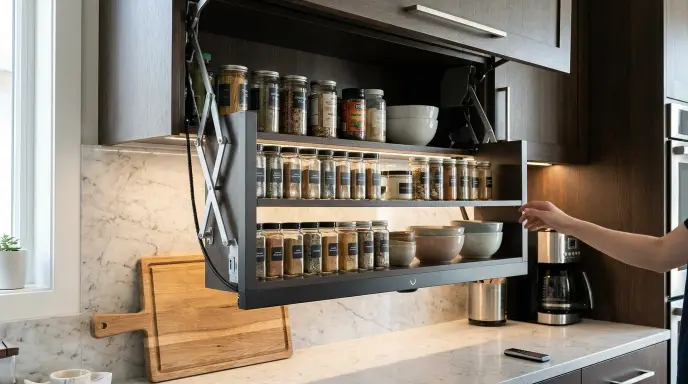
- Mechanism: Motorized vertical lift drive system operated via handheld remote and integrated touch controls.
- Cabinet Compatibility: Designed for wide upper cabinets (34-inch cabinet width specification).
- Tier Configuration: 2-tier dual storage trays with solid bases and safety railings.
- Senior Accessibility Score: 9.6/10 (for zero-effort physical operation)
Pros:
- Zero physical pulling force: Operates smoothly with a remote control, making it completely effortless for seniors with severe arthritis, limited upper body mobility, or shoulder injuries.
- Direct countertop-level descent: The electric vertical drive lowers dishes, jars, and kitchen essentials down into the seated reach zone, making it ideal for wheelchair-bound seniors.
- Spacious 2-tier storage: The generous 34-inch-wide frame accommodates everyday food containers, spice bottles, and dishes in a single organized unit.
- Solid base trays: Flat shelf surfaces prevent bottles and glassware from tipping over during movement.
Cons:
- Higher investment cost (~$580+ plus shipping), reflecting its heavy-duty motorized mechanism.
- Requires an electrical outlet or wiring inside or adjacent to the cabinet for continuous power.
- Requires a wide 34-inch upper cabinet clearance.
Senior Verdict: The ultimate aging-in-place accessibility upgrade, eliminating the need for balance, arm strength, or reach by bringing the entire cabinet contents down at the touch of a button.
👉 Check Current Price on Amazon
Buyer’s Critical Checklist: How to Measure Before Ordering
Incorrect measurements are the single largest reason for product returns and failed installations. Verify these parameters before purchasing:
Face-Frame vs. Frameless Cabinets
- Face-Frame Cabinets: These feature a solid wood border around the front of the cabinet box. Measure the clear opening between the inside edges of the face frame, not the internal cabinet box width. The shelf must pass through this narrower clearance without rubbing.
- Frameless (European-Style) Cabinets: Offer full interior box width and generally allow direct side-panel mounting.
Always check the manufacturer’s specified lateral mounting clearances to account for hinge mounts and side brackets.
Door Hinge Obstruction
- Ensure your cabinet doors open to at least 110° or 120°.
- Standard 90° hinges leave the door protruding directly into the path of the lowering shelf, which will strike the door or crush fingers during operation.
- If your doors stop at 90°, swap the hinges for wide-angle soft-close hinges before installing the shelf system.
Before pulling down upper rack contents, ensure upper cabinet doors open effortlessly by upgrading to accessible cabinet hardware or hands-free latches.
Interior Depth & Height Requirements
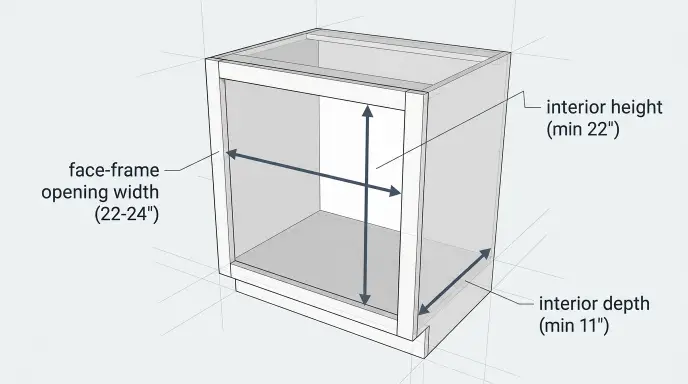
- Interior Depth: Verify your cabinet has at least 11 inches (11″ or deeper) of usable interior depth to clear the rear mounting brackets.
- Interior Height: Ensure at least 22 inches (22″ or taller) of clear vertical height from the bottom of the cabinet to the upper shelf/ceiling.
- Clear Opening Width: Measure between face-frame edges to confirm a clear opening width of 22 to 24 inches.
Pro Tip: Write down these four exact measurements before shopping:
- Minimum Clear Opening Width
- Interior Usable Depth
- Interior Usable Height
- Maximum Door Swing Angle
DIY vs. Handyman: What Does Installation Actually Require?
What the Job Involves
Pull-down shelving transfers dynamic leverage and moving loads directly onto the cabinet sides and wall anchors. A safe installation must:
- Anchor firmly into solid wall studs or heavy-duty structural cabinet brackets, never into standard drywall or thin cabinet backing.
- Distribute dynamic loads evenly through the cabinet frame.
- Be leveled with precision: even a slight tilt causes the tracks to bind, rub against cabinet walls, or fail to latch at the bottom.
Safety First for Seniors
We strongly advise seniors against attempting a DIY installation for these systems. The process requires holding heavy steel mechanisms overhead, operating power drivers at awkward angles, and standing on ladders—the exact fall risks this hardware is intended to eliminate. Have a capable family member or a licensed handyman handle the mounting.
Estimated Costs & Planning Ranges
| Item / Scope | Typical Cost Range | Key Considerations |
| Budget Wire Unit | $40 – $120 | Lightweight, basic spring assist, DIY-friendly for handymen |
| Gas-Assisted Manual Unit | $150 – $350 | Heavier hardware, needs precise mounting and stud anchoring |
| Motorized Electric Unit | $800 – $2,500+ | Requires electrical hookup and heavy-duty structural mounting |
| Handyman Labor (Per Unit) | $75 – $250 | 1–2 hours of work involving overhead drilling and precision leveling |
| Electrician (For Motorized Units) | $100 – $250+ | Optional; only necessary if installing a new in-cabinet power outlet |
Common Tools Required: Cordless drill/driver, magnetic stud finder, torpedo level, tape measure, pencil, pilot-hole drill bits, and supplied lag screws.
Smart Organization: What Belongs in a Pull-Down Shelf
Organizing your drop-down shelves thoughtfully protects both the mechanism and the user.
Safe Items to Store
- Spices and seasonings: Store smaller spice jars, condiments, and pill bottles on solid-bottom drop-down units (like our Model 2 pick) with clear safety barriers to ensure they never tip over or fall through during movement.
Hazards to Keep Out
- Heavy Cast-Iron Pans: These exceed safe dynamic weight limits and can pull the shelf down too rapidly.
- Large Cooking Oil Gallons: Bulky, heavy, and create severe slip hazards if dropped.
- Delicate Glass Dinnerware: Repeated mechanical motion and vibration can cause fine crystal or delicate porcelain to chip, slip, or shatter.
- Any item that cannot be safely lifted with one hand.
Organization Tip: Place high-frequency items in the front row and line the trays with non-adhesive grip liners to keep containers from shifting during ascent or descent.
Good kitchen visibility is critical when handling kitchen items. Review our guide to aging eye task lighting principles to eliminate shadows under and inside upper cabinets. Upper storage units should always keep users away from live burners. If you are modifying surrounding workstations, make sure your cooking area is equally secure by exploring kitchen stove safety for older adults to eliminate unattended cooking accidents.
Frequently Asked Questions
Do pull-down cabinet shelves require a complete kitchen remodel?
No. High-quality pull-down shelf systems are designed to retrofit into standard existing wall cabinets, provided your interior width, depth, and door clearance match the unit specifications. A full kitchen renovation is not required.
Can a person in a wheelchair operate a pull-down shelf?
Yes. Under ADA guidelines, the unobstructed forward reach zone for a seated individual ranges between 15 and 48 inches above the finished floor. Manual units pull down into the upper tier of this range, while motorized electric models descend directly to countertop level (~36 inches), making them completely accessible from a seated position.
Does Medicare cover the cost of pull-down kitchen shelves?
Original Medicare (Part A and Part B) generally does not cover home modifications or adaptive cabinetry, classifying them as residential modifications rather than Durable Medical Equipment (DME). However, certain Medicare Advantage (Part C) plans, Medicaid Home and Community-Based Services (HCBS) waivers, and VA home modification grants (such as SAH or HISA) may assist with funding. Read our guide on how home modification coverage works
for detailed eligibility guidelines.
Are pull-down shelves hard to operate for someone with arthritis?
Manual gas-assisted shelves require very little effort once loaded to their recommended 8–12 lb sweet spot. However, gripping a small bar handle can still cause pain for severe joint arthritis. To minimize strain, choose a unit with a thick, ergonomic crossbar, retrofit the handle with a cushioned loop, or consider a motorized push-button unit. For related bathroom and kitchen upgrades, check out our recommendations for adaptive hardware for arthritis
Next Actionable Steps & Action Plan
Pull-down cabinet shelves are one of the most effective retrofits available to preserve kitchen independence, eliminate hazardous step stools, and prevent catastrophic falls. Bringing preserved foods down to counter height without overhead reaching is the first step in avoiding shoulder strain. Once your jars are on the counter, unthread them effortlessly using high-leverage jar openers designed for seniors to prevent sudden wrist twists when the seal breaks.
Your 3-Step Action Plan
- Audit and Measure: Identify the 1 or 2 upper cabinets containing your everyday essentials. Record the clear opening width, usable interior depth, height, and door hinge opening angle.
- Choose the right type: Pick our Model 1 heavy-duty gas-assist unit for general kitchenware[cite: 6], choose the Model 2 aluminum solid-bottom organizer if arthritis or choose Model 3 if you want an affordable, dedicated drop-down organizer for spices and daily vitamins. Invest in our Model 4 34″ motorized lift if you need a zero-effort, push-button solution for wheelchair accessibility or severe mobility constraints.
- Professional Installation & Safe Loading: Schedule a handyman to anchor the hardware securely into structural supports. Once installed, load it within the recommended 8 to 12 lb working range for smooth, effortless operation.
Continue Upgrading Your Home Safety
- Build a safer, more accessible culinary space with our complete kitchen aging-in-place guide.
- Learn about layout and drawer conversions in our accessible kitchen cabinet systems overview.
- Upgrade hard-to-turn knobs throughout the home with adaptive hardware for arthritis.
- Optimize your kitchen work areas with our aging eye task lighting principles.
Disclaimer: This article is intended for informational and educational purposes only and does not constitute medical, occupational therapy, or structural engineering advice. For personalized home assessments, consult with a Certified Aging-in-Place Specialist (CAPS) or a licensed occupational therapist.

7 Comments