
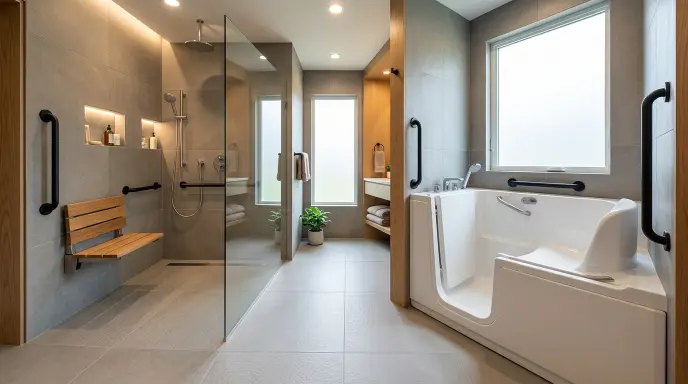
Walk-In Tub vs. Walk-In Shower for Seniors: Safety, Mobility, or Comfort—Which Fits Your Needs?
Quick Answer: Choose a walk-in tub if you need targeted hydrotherapy for chronic joint pain, have adequate leg strength to clear a low step, and prefer soaking baths. Choose a curbless walk-in shower if you use a wheelchair or walker, require caregiver assistance, want faster daily routines, or want to protect your home’s resale value. Safety needs depend on personal mobility levels—not just age.
Walk-In Tub vs. Walk-In Shower: The 3-Second Decision Matrix
Before diving into specifications, here is the direct side-by-side verdict based on the core decision factors most buyers evaluate:
| Feature / Decision Factor | Walk-In Tub | Curbless Walk-In Shower | Winner / Best For |
| Step-In Threshold | 3–7 inches (Step-over barrier) | 0–2 inches (Roll-in available) | Shower (Zero trip hazard) |
| Transfer Difficulty | Moderate to High (Must sit, wait, drain) | Low (Walk or roll straight in) | Shower (Effortless entry) |
| Therapeutic Relief | Exceptional (Hydro/air jets & deep soak) | Minimal (Standard running spray) | Tub (Chronic pain relief) |
| Average Bathing Time | 20–30 minutes (Fill & drain cycles) | 5–10 minutes (Instant use) | Shower (Daily speed) |
| Caregiver Ergonomics | Difficult (Leaning over high walls) | Easy (Direct open/seated access) | Shower (Prevents back strain) |
| Home Resale Appeal | Niche / Often removed by buyers | Broad (Universal design standard) | Shower (Long-term home value) |
| Typical Cost Range | $5,000 – $15,000+ installed | $3,000 – $10,000+ installed | Shower (Lower overall budget) |
If a senior deals with severe arthritis but maintains sturdy balance and leg strength, a walk-in tub offers unmatched relief. If they use a walker or wheelchair, or if mobility is declining, a curbless shower is the safest, most sustainable option. Once you decide on a walk-in shower over a tub, your next key decision is threshold height — weigh our complete guide on choosing between a curbless and low-curb shower to match your mobility level. Walk-in tubs and curbless showers can cost thousands of dollars to install. Before paying out of pocket, review the Medicare coverage rules for walk-in tubs to see if private Advantage plans or VA grants can offset the cost.
Table of Contents
Walk-In Tub vs. Shower Safety: Slip and Fall Prevention for Seniors
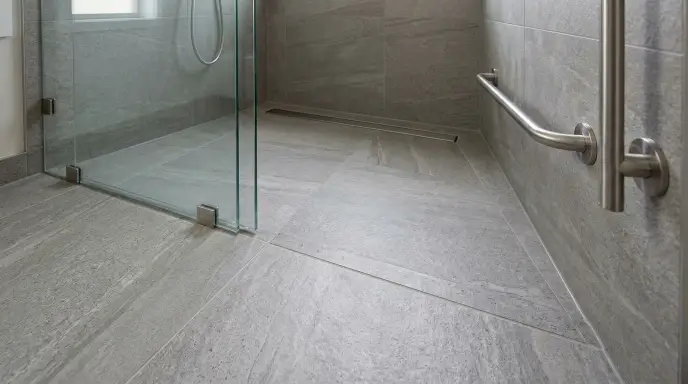
Fall prevention is the primary reason families reconfigure bathrooms for aging in place. However, the truly “safer” fixture depends on how balance issues present themselves. Fall risk is the #1 reason families evaluate overall senior bathroom safety—but the ‘safer’ option depends entirely on how a person falls, not just whether they might.
Step-In Thresholds: Low-Curb vs. Zero-Curb
- Walk-In Tubs: Require clearing an entry threshold between 2 and 4 inches (sometimes up to 7 inches depending on plumbing rough-ins). While low compared to traditional tubs, this step-over ledge remains a tripping hazard for anyone dealing with Parkinson’s tremors, vertigo, or severe hip stiffness.
- Curbless Showers: Eliminate the entry ledge with a zero-threshold design. Occupational therapists consistently recommend true roll-in curbless showers for fall-prone seniors because feet never leave the floor surface during entry.
Water Spills & Floor Drainage Hazards
- Showers: Open, walk-in layouts can allow water to splash onto outer flooring if the pan lacks an adequate pitch (minimum 1/4-inch slope per foot toward the drain) or lacks a splash screen, creating a slippery surface outside the enclosure.
- Tubs: The door gasket serves as the primary point of failure. Over time, silicone and rubber seals degrade under thermal stress and mineral buildup, causing slow leaks that pool water beneath or around the base unseen.
Safety Verdict: Neither option is automatically slip-proof out of the box. Proper drainage pitching in showers and certified watertight door gaskets in tubs are essential to avoid hazardous floor puddles.
Open designs mean water can splash onto surrounding tiles if not properly sloped, making it essential to know how to keep the bathroom floor dry after a shower to avoid hazardous puddles.
Non-Negotiable Bathroom Safety Upgrades
Whichever option you choose, install these safety essentials during construction:
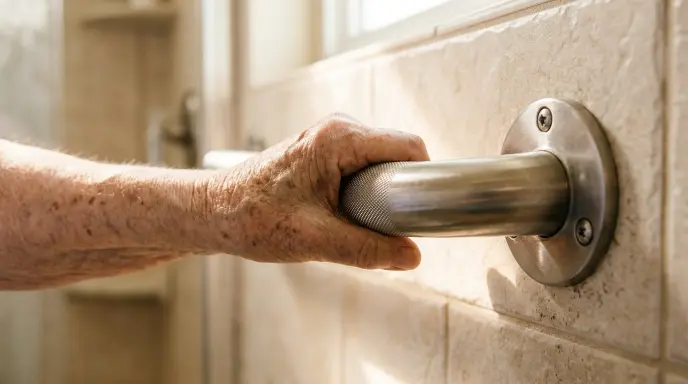
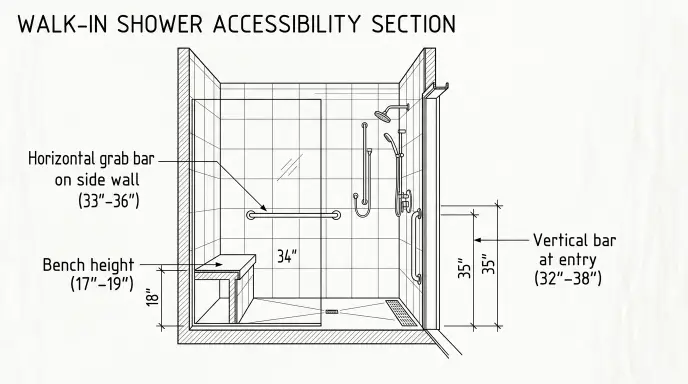
- Wall-Anchored Grab Bars: Rated for 250+ lbs and secured directly into wall studs or dedicated wood backing—never into sheetrock or hollow tile anchors alone. Grab bars rated for 250+ lbs, professionally anchored into studs (follow our guide on proper walk-in shower grab bar placement for ideal heights and angles).
- Slip-Resistant Flooring: A certified dynamic coefficient of friction (DCOF) of 0.42 or higher (textured porcelain tile or slip-resistant composite pans). Non-slip surfaces with a high coefficient of friction; choosing the safest bathroom flooring for seniors ensures protection right as you step out.
- Anti-Scald Pressure-Balance Valves: Calibrated to limit water temperature to a maximum of 120°F to prevent thermal burns in seniors with diminished temperature sensation. Install certified anti-scald valves for seniors that cap water temperature at 120°F to prevent severe burns.
Senior Mobility & Caregiver Access: Wheelchairs, Walkers, and Assisted Bathing
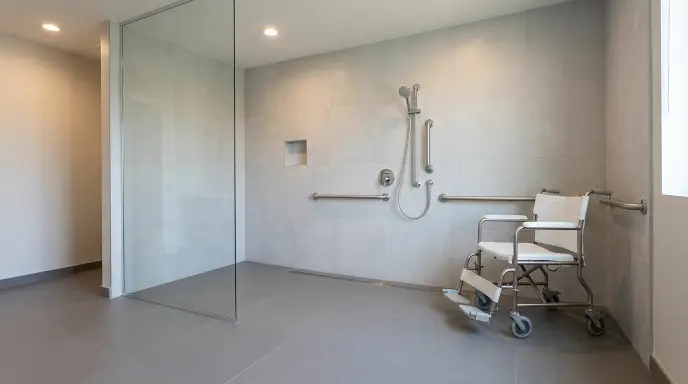
Assessing current physical ability is not enough; accessibility planning must account for mobility changes over the next 3 to 7 years.
Wheelchair & Walker Accessibility
If your loved one uses a wheelchair or may need one in the near future, a walk-in tub is rarely viable. Transferring from a wheelchair into a narrow walk-in tub seat requires significant upper-body strength or an overhead lift track.
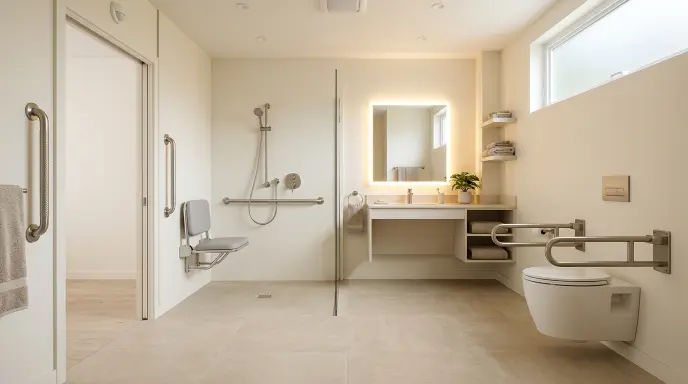
A curbless, zero-threshold walk-in shower accommodates:
- Seamless roll-in access for shower-safe wheelchairs.
- Straightforward walker entry without having to lift devices over curbs.
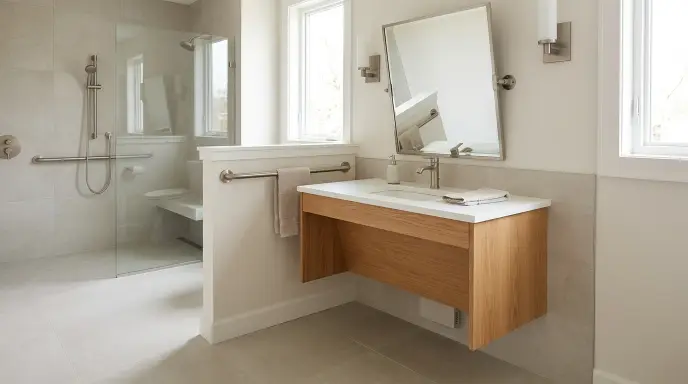
- Level lateral transfers onto a sturdy, wall-mounted folding teak or composite bench.
For progressive neuromuscular or mobility-limiting conditions, a curbless shower prevents an expensive secondary renovation later.
Assisted Bathing: The Impact on Caregivers
Walk-in tubs place significant physical strain on family members and home health aides. The tub’s high perimeter walls (typically 24 to 38 inches) force caregivers to bend awkwardly at the waist to assist with washing, driving chronic lower-back fatigue.
A walk-in shower allows the caregiver to:
- Stand beside an open entry or low half-curtain without bending over barriers.
- Direct a long-hose handheld shower wand comfortably from a standing or stool-seated position. Pairing a shower bench with a dedicated handheld shower head setup for seniors on an adjustable slide bar allows seated, stress-free bathing.
- Maintain unobstructed line-of-sight and immediate access in case of dizziness or distress.
Comfort & Health Benefits: Hydrotherapy Soak vs. Independent Showering
Beyond basic hygiene, physical comfort dictates which unit gets used happily every day.
The Walk-In Tub for Chronic Pain Relief
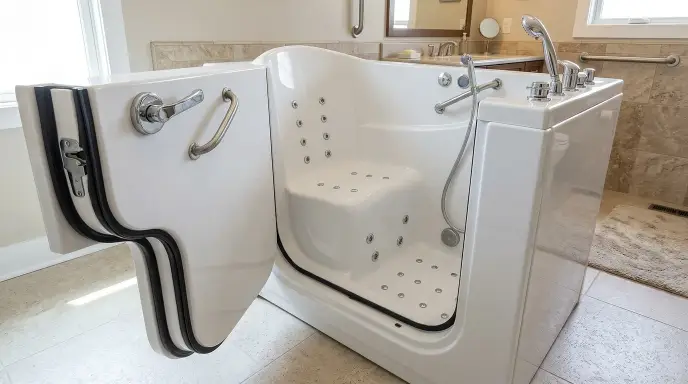
When soothing chronic joint or systemic pain is the primary objective, walk-in tubs deliver benefits that showers cannot duplicate:
- Deep Immersion: Buoyancy relieves gravitational pressure on arthritic hips, knees, and spine joints.
- Hydrotherapy & Air Jets: Targeted pressure streams stimulate local blood flow and release tension associated with fibromyalgia and neuropathy.
- Supplemental Modalities: Many premium models feature integrated seat warmers, aromatherapy reservoirs, and chromotherapy light cycles.
The Walk-In Shower for Everyday Independence
For seniors who prioritize efficient, stress-free hygiene over soaking routines, showers are superior:
- Instant-on hot water with zero waiting periods.
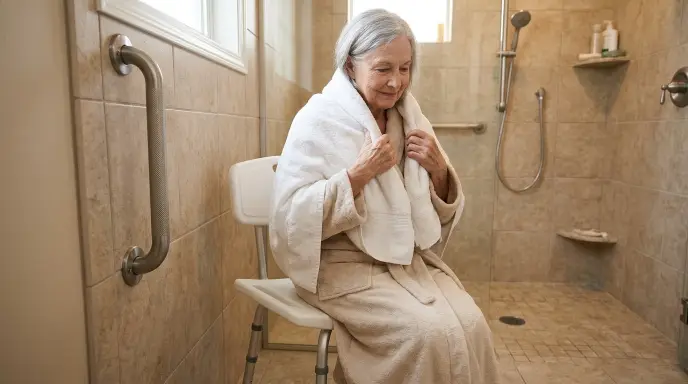
- Built-in benches paired with an adjustable slide-bar handheld shower head provide a seated, independent shower experience.
- Low maintenance and easy daily upkeep.
Real-World Drawbacks Most Manufacturers Don’t Disclose
Product brochures frequently omit the day-to-day inconveniences of using these fixtures.
The Walk-In Tub “Wait-Time” and Chill Factor
A walk-in tub cannot be filled before entering:
- You must step inside, secure the door latch, and sit in a cold, empty tub while it fills (taking 6 to 10 minutes depending on municipal water pressure).
- After bathing, you must sit still while the tub drains completely before opening the door (an additional 3 to 7 minutes on standard drain designs).
In drafty bathrooms, sitting wet in a draining tub causes sudden chills. While heated seat rests and dual-drain systems mitigate this, they noticeably increase the total purchase price.
Hot Water Tank Capacity: The Unplanned $2,000 Upgrade
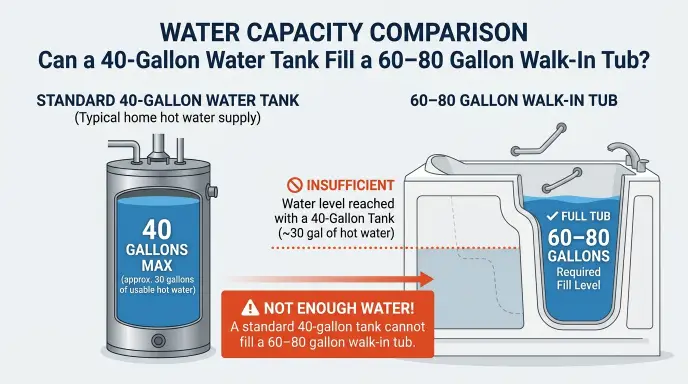
Standard residential water heaters hold 40 to 50 gallons of water. A standard walk-in tub requires 50 to 80 gallons to submerge the bather past the chest jets.
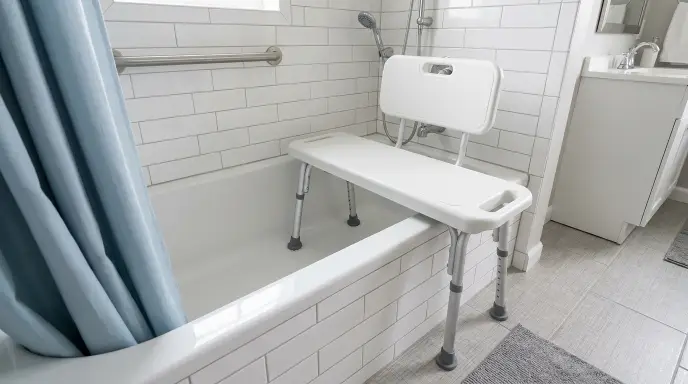
Attempting to run a walk-in tub on a standard 40-gallon tank frequently leaves the user with lukewarm water halfway through the fill. Upgrading to a 75-gallon tank or a dedicated high-GPM tankless gas/electric water heater typically adds $1,500 to $3,500 in unbudgeted plumbing costs. If a full $5,000+ remodel isn’t feasible right now, you can learn how to make a high-step bathtub safe without remodeling as an interim solution.
Shower Drafts and Temperature Maintenance
Curbless, doorless walk-in showers can suffer from convective air currents that push cool room air into the stall.
To counter heat loss:
- Install a floor-to-ceiling glass partition or weighted barrier-free curtain to retain steam.
- Position an infrared heat lamp directly outside the shower threshold.
- Add radiant electric heating mats beneath the bathroom floor tiles during renovation.
Cost Comparison: Walk-In Tub vs. Walk-In Shower Installation Prices
Total investment hinges on underlying infrastructure, plumbing capacity, and electrical modifications.
| Expense Breakdown | Standard Walk-In Tub | Curbless Walk-In Shower |
| Unit / Materials | $3,000 – $10,000 | $1,500 – $5,500 |
| Installation Labor | $2,000 – $5,000 | $1,500 – $4,500 |
| Plumbing & Electrical Work | Often required (50A breaker, 3/4″ water lines, tank upgrade) | Minimal (Standard drain adjustments and valve swap) |
| Total Turnkey Cost | $5,000 – $15,000+ | $3,000 – $10,000+ |
Walk-in tubs and barrier-free showers carry very different price tags. See how these fixtures impact overall bathroom remodeling costs for seniors alongside low-cost DIY alternatives.
Home Resale Value and Buyer Demand
Curbless showers carry near-universal buyer demand. Prospective home buyers of all ages view modern tile showers as architectural upgrades.
Conversely, buyers often view a walk-in tub as a clinical, demographic-specific apparatus that must be removed at their own expense, making curbless showers the stronger long-term property investment. If this purchase is part of a larger home safety remodel, refer to our comprehensive aging-in-place bathroom guide to plan doorway clearances and layout flow.
Medicare, Insurance, and Financial Assistance
- Original Medicare (Parts A & B): Does not pay for walk-in tubs or showers; these are categorized as personal comfort items or home modifications rather than Durable Medical Equipment (DME).
- Medicare Advantage (Part C): Certain specialized managed-care policies include supplemental allowances for home safety modifications. Check your individual policy rider.
- Medicaid HCBS Waivers: Many states offer Home and Community-Based Services (HCBS) waivers that fund accessibility bathroom renovations to prevent nursing home placement.
- VA Grants: Qualifying military veterans can utilize HISA Grants (Home Improvement and Structural Alterations) or SAH Grants (Specially Adapted Housing) to fund bathroom accessibility remodels.
Final Recommendation: Which Should You Choose?
Choose a walk-in tub if:
- You or your parent live with chronic arthritis, severe muscle tightness, or back pain that demands deep, warm-water soaking.
- The user steps over low objects without balance support.
- The budget supports potential water heater and electrical service upgrades.
- The bather can tolerate waiting inside the tub during fill and drain cycles.
Choose a walk-in shower if:
- Mobility is uncertain or declining, or the user relies on a walker or wheelchair.
- A family member or paid aide assists with daily bathing.
- Quick, low-maintenance daily showers fit the routine better than long soaking sessions.
- Protecting real estate appeal and resale value remains a priority.
Frequently Asked Questions
Can an existing bathtub be converted directly into a walk-in shower or tub?
Yes. Tub-to-shower retrofits are standard practice, typically taking 1 to 3 days using pre-molded acrylic enclosures or 3 to 5 days for custom waterproofing and tile. Converting to a walk-in tub requires identical removal labor, plus dedicated carpentry to rebuild adjacent framing and tie into local electrical lines for the air pumps.
Does a walk-in tub require a dedicated electrical circuit?
Yes. Any walk-in tub equipped with water jets, heated surfaces, or air injectors requires an independent 15- to 20-amp GFCI-protected electrical circuit run from your main distribution panel to satisfy local electrical codes. Simple soaking-only models do not require electrical hookups.
How long does installation take for each option?
A pre-fabricated curbless shower conversion typically finishes in 1 to 3 business days. A walk-in tub installation typically requires 2 to 4 business days due to electrical line pulls, subfloor reinforcement, and necessary water heater adjustments.
Are walk-in tubs difficult to clean and sanitize?
Walk-in tubs equipped with jets require regular flushing with specialized system cleaners every 4 to 6 weeks to clear biofilm and mold from inner plumbing channels. Curbless walk-in showers with large-format tile and quality sealants are simpler to squeegee and wipe clean.

11 Comments